
A soundproof canopy generator is the simplest way to keep a standby set inside a site noise limit. This guide explains how the quoted dB(A) figure works, what the enclosure costs in cooling, and which numbers to verify before you request a quotation from Tesla Power's engineering team.
- Compare the quoted dB(A) figure at 7m with the boundary limit, and read the EU outdoor noise directive note for the marking duty.
- Ask for the declared sound power level and the rating basis on the same data sheet.
- Check the radiator airflow path before you accept the derated output.
- Confirm the ambient reference conditions the quoted figure assumes.
Why does a soundproof canopy generator decide the noise outcome?
A soundproof canopy generator decides the noise outcome because the enclosure, not the engine, sets what a neighbour hears. Lined panels, a lined exhaust and louvred air paths strip energy from every surface the set exposes. The same engine that reads loud in the open becomes a documented figure once it is boxed, and that figure is what the planning condition is written against. Every later decision hangs on this one choice.
The consequence reaches past the gate. An urban plot with a 60dB(A) boundary limit leaves little room for an open set, and the acoustic survey, the plot layout and the clearance around the canopy all follow from the same number. Buyers who decide late end up moving the set twice. Tesla Power Equipment draws the enclosure to the site condition from the first sketch, so the noise figure is fixed before the steel is cut.
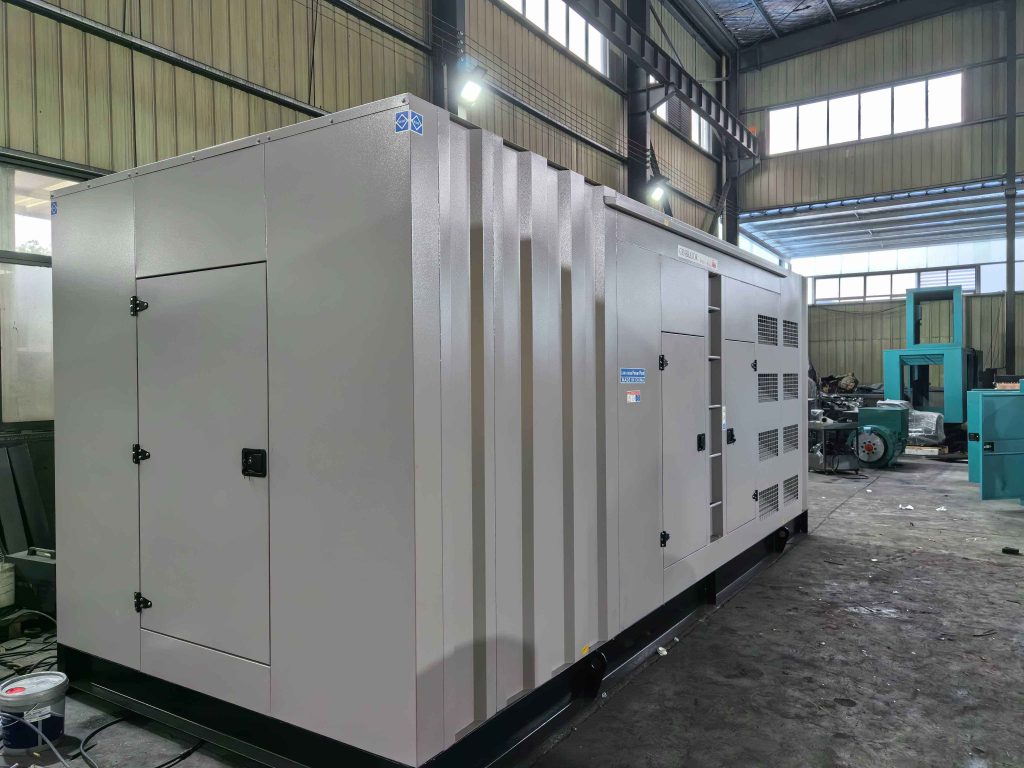
What does the canopy attenuate, and what passes straight through?
The canopy attacks three noise paths. Exhaust noise leaves the engine at high energy, and a lined silencer in the air path removes most of it before the stack. Radiator fan noise is absorbed by the louvre baffles and the lined plenum behind them. Casing noise from the engine block is damped by the panel insulation, which is why a lined enclosure reads far lower than a sheet-metal box of the same footprint.
Three things still pass. Low-frequency energy from the firing order travels through the baseframe into the ground, and structure-borne vibration reaches a nearby wall before the air path matters. High-velocity air through undersized louvres whistles, adding a noise of its own. The exhaust stack outlet matters as much as the silencer, because a bare end radiates downstream. Tesla Power sizes the stack and the silencer as one path, and our equipment selection guides show how to read those drawings.
How is canopy noise quoted on a data sheet?
Every canopy is quoted with two numbers, and buyers often confuse them. Sound pressure at 7m, in dB(A), describes what a listener hears at that distance under a stated load. Declared sound power level, in dB per 1pW, is a property of the set that travels with the marking on the nameplate. A sheet that carries one figure and not the other answers only half the question. The first figure sets the site layout; the second is the one the EU noise rules ask the supplier to declare and mark, and Tesla Power prints both on the same sheet.
| Quoted figure | Unit | What it settles |
|---|---|---|
| Sound pressure at 7m | dB(A) | What a listener hears at that distance at a stated load |
| Declared sound power level | dB per 1pW | A property of the set, declared and marked under the directive |
| Rating basis | ESP, PRP or COP | The duty the quoted sound figure belongs to |
| Measurement method | ISO 8528-10 | How the level was measured on the enveloping surface |
A dB(A) figure without its conditions is not evidence. The load condition, the measurement distance and the environment state belong with the number, and the method behind it is the ISO 8528-10 enveloping surface method. When the site sits inside the EU, the marking duty for power generators follows the outdoor noise directive text, which splits sets at 400kW: below the split the set meets a permissible sound power level, at or above it the set carries the marking without the limit.
Conditions travel with the number.
How do you convert a quoted figure to a site distance?
Sound from a set spreads as the square of the distance, so the arithmetic is fixed. Every doubling of distance removes 6dB(A), and every ten-fold increase removes 20dB(A). That single rule turns a data-sheet figure into a site answer for a soundproof canopy generator in a city block, without instruments, and it lets a buyer check a supplier's distance claim in a minute.
Worked example: from 75dB(A) at 7m to the property line
A canopy quoted at 75dB(A) at 7m reads 69dB(A) at 14m, because 75dB(A) - 6dB(A) = 69dB(A). At 70m, ten times the reference distance, the level falls by 20 x log10(10) = 20dB(A), giving 55dB(A). If the boundary limit is 60dB(A), the required distance works out as 7m x 10^((75-60)/20) = 7m x 5.6 = 39m. A set placed past 39m clears the limit on the quoted figure; anything closer needs a lower quoted level or a barrier. Our 500kVA silent type set is quoted on the same basis.
Which numbers belong in the noise specification?
The noise specification is a short list, and every line carries a condition. State the quoted sound pressure at 7m with the load condition it was measured at. State the declared sound power level and confirm it appears on the marking. State the rating basis, because a figure at standby duty is not the duty a prime rating carries. State the ambient reference, which the ISO 8528-1 standard sets at 25°C and 100kPa for standard reference conditions.
Two more lines prevent arguments later. Ask for the derated output at the site ambient rather than the factory figure, because a canopy already spends part of the cooling margin. Ask for the exhaust back pressure limit from the engine data sheet, since a silencer added behind a canopy can push it. Tesla Power Equipment writes both lines into the order sheet, and the test record repeats them so the site team can check the delivered set against the paperwork.
Why does the canopy cost cooling capacity?
A canopy costs cooling capacity because the cooling air no longer moves freely. Radiator air that recirculates back to the intake raises the inlet temperature, and the engine loses output as that temperature climbs above the reference conditions. The derating curve is engine-specific, and ISO 3046-1 defines the reference conditions the curve is drawn from: 25°C, 100kPa and 30% relative humidity. A canopy that meets the noise figure but ignores the air path quietly costs the buyer output.
The fix is geometric. Give the radiator discharge a straight path to atmosphere, keep it away from the intake, and size the louvre free area from the engine cooling air demand rather than from the panel drawing. Our room ventilation sizing notes cover the airflow logic a soundproof canopy generator for a plant room follows, and the same mistakes appear in both places. Tesla Power checks the air path on the layout drawing, because after the panels are welded the only fix left is a bigger fan.
Where does an open-frame set fail the same site limit?
An open-frame set fails an urban limit for a simple reason: every surface radiates. Exhaust, fan and casing noise all leave the set with nothing in the way, and the survey shows it. So what does the site hear at the boundary? The survey answers with a number, and the number decides the enclosure. Distance is the only free treatment a site can add after the set is bought.
The hours matter as much as the level. A set that runs two hours a month for a test produces a different exposure profile from one that carries the load every evening. A soundproof canopy generator for residential projects is usually the cheaper answer once the survey, the barrier and the extra land are priced together, and the choice between a canopied set and an open frame set comes down to the boundary limit and the distance available. Tesla Power quotes both options side by side.
What should the canopy RFQ ask for?
The RFQ is where the noise figure becomes enforceable. Ask for the quoted level with its conditions, the declared sound power level, the rating basis, the site ambient derate and the exhaust back pressure limit on one sheet. A supplier who sends only a marketing figure has not sent a specification, and the gap shows up at the survey stage when it is expensive.
| Spec line | What to state | Why it matters |
|---|---|---|
| Sound pressure at 7m | level with load condition | proves the boundary limit at the stated operating point |
| Declared sound power level | declared and marked | the figure the EU noise file is built on |
| Rating basis | ESP at 25°C | ties the quoted figure to the duty the site uses |
| Site ambient derate | derated output at site ambient | the output the site actually receives |
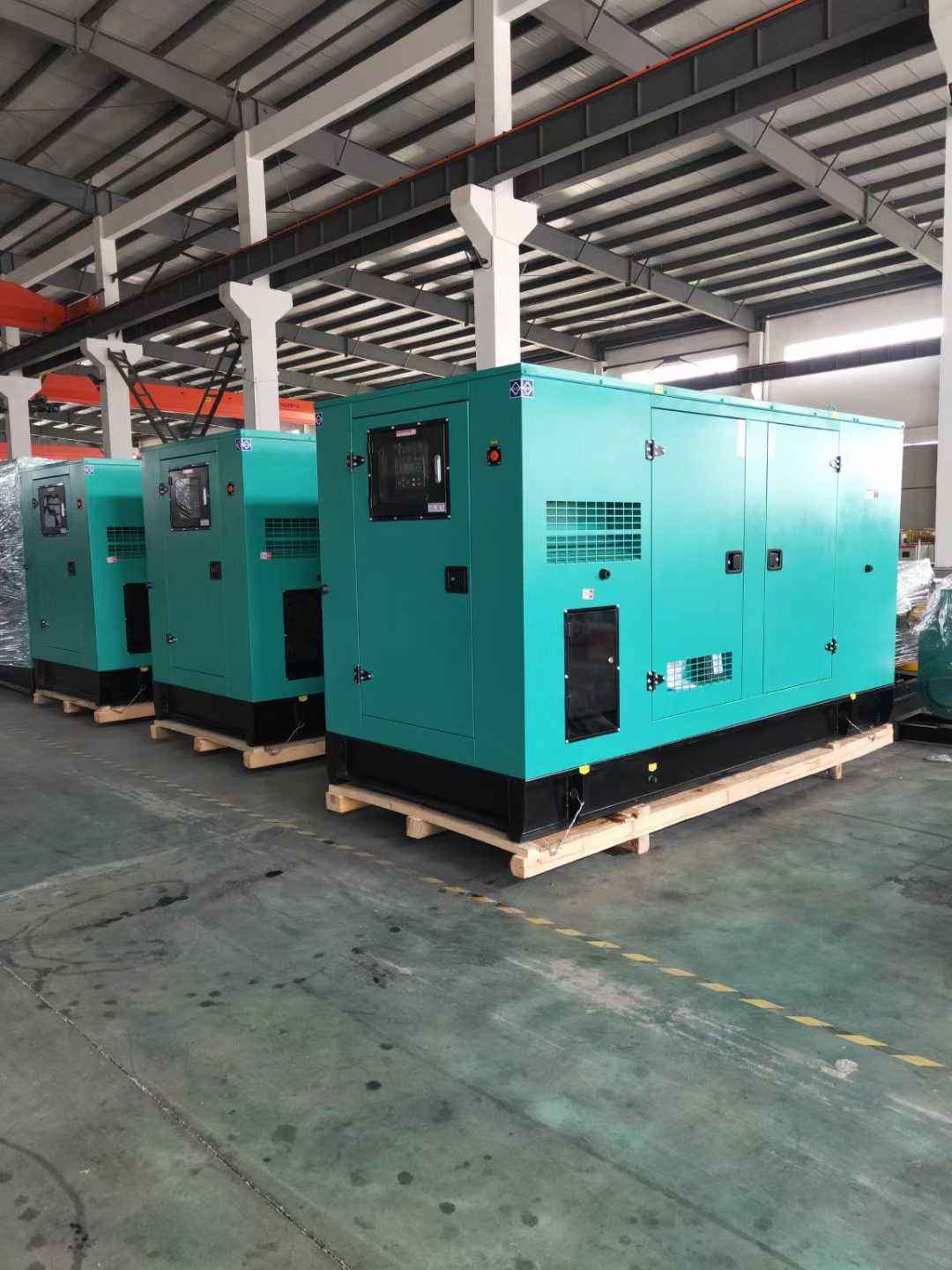
Send the boundary limit, the site plan and the duty the set will carry with the enquiry, and ask for the soundproof canopy generator documentation for the export file in the same pack. The silent and canopy set range shows the same lines filled in across the ratings, and China soundproof canopy generator suppliers quote on the same two figures. Two minutes of arithmetic at this stage replaces a site survey argument later.
Frequently asked questions about soundproof canopy generator noise
Sound-attenuated canopies are commonly quoted between 65dB(A) and 85dB(A) at 7m in manufacturer data sheets, with the figure set by the liner thickness, the louvre design and the exhaust path. An open set without attenuation sits well above that band. Treat the quoted figure as a claim to verify, and check the load condition it was measured at before comparing two offers.
A canopy can reduce the output the site receives, and the mechanism is heat. Radiator air that recirculates raises the inlet temperature, and the engine derates as that temperature climbs above the reference conditions. The engine data sheet carries the derating curve, so ask for the derated figure at the site ambient rather than accepting the factory rating at the top of the sheet.
The dB(A) figure is a pressure measurement at a stated distance and load, so it describes what a listener hears there. The declared sound power level, in dB per 1pW, is a property of the set itself and appears on the marking. The first guides the site layout; the second is the figure the EU noise file is built on, and the two are not interchangeable.
The directive covers equipment for use outdoors, and power generators sit inside its scope. It splits sets at 400kW: below the split a permissible sound power level applies, at or above it the set carries the marking without the limit. The consolidated text on EUR-Lex and our note on the directive walk through the bands and the papers an RFQ should ask for.
Sometimes, when the distance and the hours allow. An open set radiates from every surface, so the level falls with distance alone, and the required distance grows fast: each 6dB(A) of reduction needs double the distance. In a city block the arithmetic usually forces a canopy or a barrier, and the survey decides which one.
The noise figure depends on the liner and the seals, so check the panel insulation, the door seals and the silencer condition at each service. A torn liner or a missing door seal raises the level a neighbour hears without changing the nameplate. Keep the silencer and the stack outlet clean, because a blocked outlet changes both the noise and the back pressure at the engine.
Comparing soundproof canopy generator manufacturers line by line starts with the quoted level, its conditions, the declared sound power level, the rating basis, the ambient derate and the back pressure limit. A lower quoted level measured at a lighter load is not a quieter set. Send both sheets to Tesla Power's engineering desk and we will read them against the site limit with you.