
A silent diesel generator hides an engine inside a lined canopy, and the build decides both the sound level and the cooling margin. Tesla Power's engineers explain the noise figure, the canopy layers and the derate in this guide, then show how to compare options before you request a quote.
- Read the sound power level at the site load, not the no-load figure.
- Check the canopy layers, because the lining and the baffle do the work.
- Size the louvre on the free area, because a sealed box runs hot.
- Confirm the derate at the room temperature, not the outdoor figure.
What does a silent diesel generator sound like at one metre?
The sound level of a silent set sits between 75dB(A) and 90dB(A) at one metre, depending on the size and the canopy build. The product page for a small silent diesel generator set shows the canopy on a compact frame. An open set of the same rating often reads near 100dB(A), so the canopy takes 10dB(A) to 25dB(A) out of the reading.
The figure falls as you move away. Sound drops about 6dB(A) for every doubling of distance in a free field, so a set that reads 85dB(A) at one metre reads about 67dB(A) at eight metres. A wall, a fence or a plant room changes that arithmetic, and the change can help or hurt. Measure at the boundary that the permit names, and log the reading with the load, the wind and the weather.
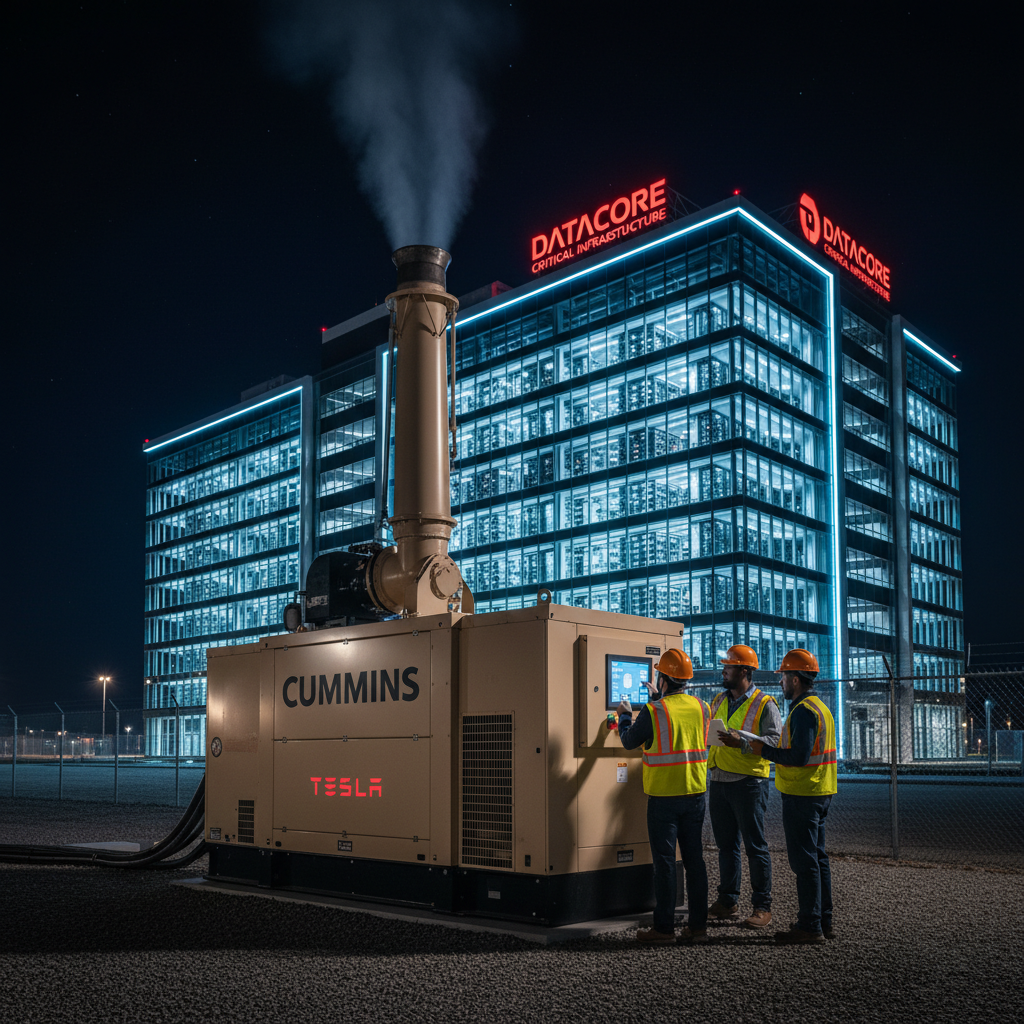
A small set can use a single-skin canopy, while a large set needs a double skin with a mineral wool core. Ask for the wall build before you compare two prices, because the sound level follows the wall rather than the paint.
What is inside a silent canopy and why does it work?
A silent canopy is a steel box with three jobs. It absorbs sound, it blocks the direct path from the engine, and it still moves enough air to cool the set. The lining absorbs the mid and high frequencies that the ear finds harsh. The baffle path forces the air to turn corners, and each corner drops the sound a little more. Sealed joints stop the leaks that undo the rest.
The layers stack, and the order matters. Tesla Power builds the canopy so the air enters low, turns twice and leaves high, which keeps the noise inside and the heat moving. A cheap canopy skips the baffle and seals the box, and the result is a hot set with a modest cut. A buyer should ask which of the three jobs the canopy does well.
How does the canopy manage heat without losing the noise cut?
Airflow and noise fight each other. A wide louvre moves air well and leaks sound, while a narrow louvre cuts sound and chokes the fan. The design point is the free area after the grille, not the frame size of the louvre. A canopy that holds the rating at 40°C needs more free area than one rated at 25°C, and the difference shows up as a larger wall opening.
The radiator has to match the canopy. A larger core rejects the same heat with less airflow, so the fan can run slower and quieter. That trade costs money at the factory and saves it at the boundary, because a quiet fan keeps the whole set on the right derate line. Read the EU Outdoor Noise Directive limits before you fix the louvre size, because the limit sets the free area you can afford.
What sound level should a buyer specify?
Specify a sound power level in dB(A) at a stated load and a stated distance. A figure without both is not comparable, and a catalogue number is often measured at no load. Ask for the test method as well, because the reference surface changes the result. A supplier who will not state the method cannot be compared on noise.
| Canopy element | What it does | Typical effect |
|---|---|---|
| Lined panel | Absorbs mid and high frequency | 5 to 8dB(A) |
| Baffle path | Blocks the direct engine path | 4 to 6dB(A) |
| Sealed joints | Closes the leak paths | 2 to 3dB(A) |
| Larger radiator | Holds the rating with less airflow | Keeps derate in check |
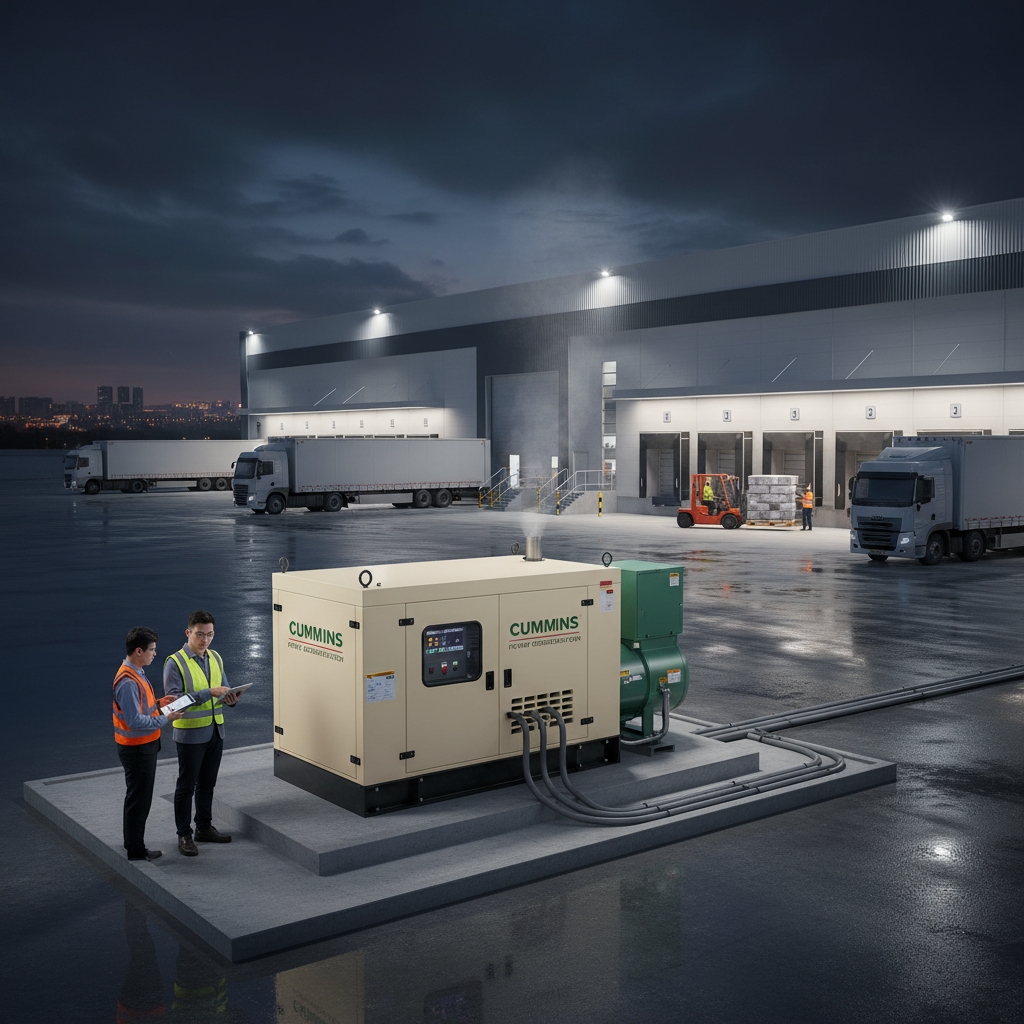
The sum is not a simple addition, because the elements interact. A good baffle with a poor seal still leaks, and a good seal with no lining still rings. Tesla Power quotes the assembled figure rather than the sum of the parts, because only the assembled figure matters at the boundary.
Which applications suit a silent diesel generator?
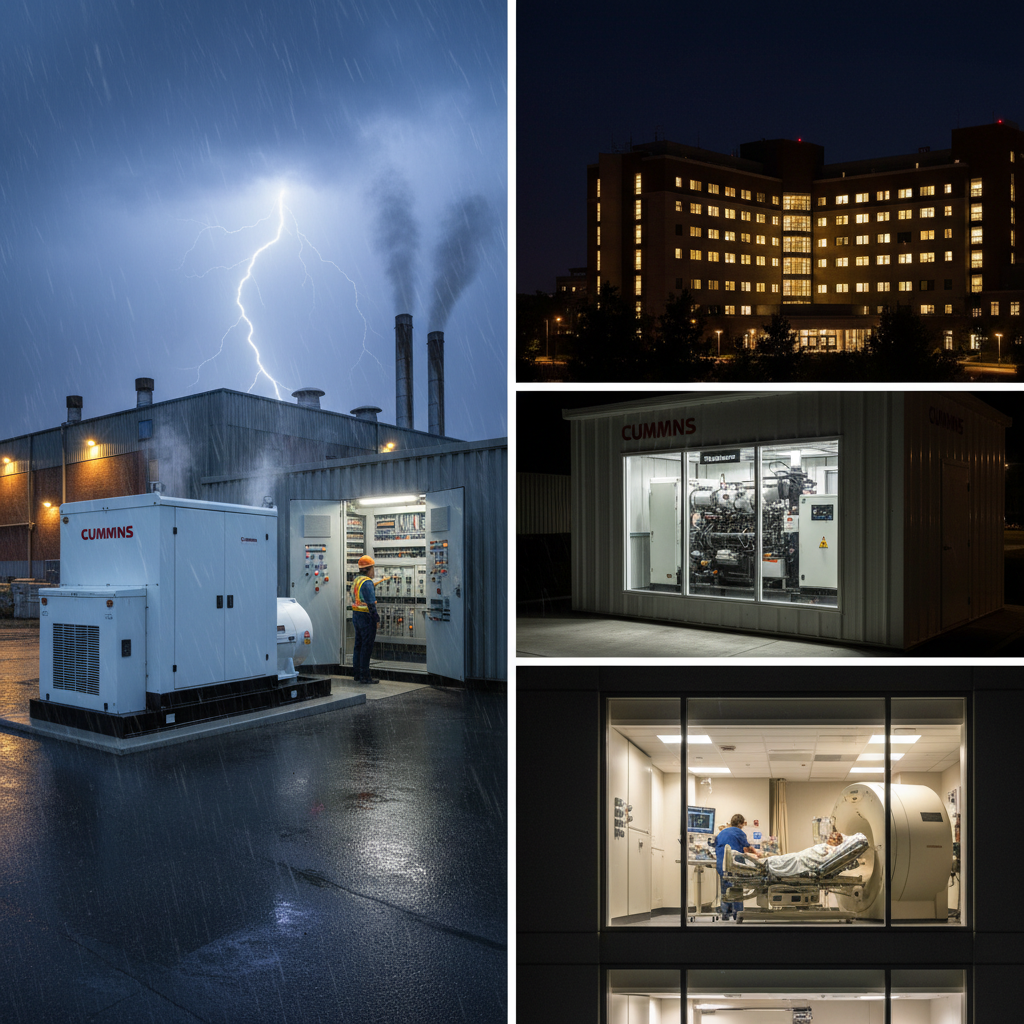
Any site with a close neighbour or a permit suits a silent set. A hospital, a hotel, a school, a supermarket and a data centre all sit near people who sleep at night. A construction site in a city also suits one, because the working hours are often limited by a noise rule as well as a curfew. The permit, not the machine, usually sets the target.
A silent diesel generator for hospitals also carries a medical load, so the start time matters as much as the noise. A silent diesel generator for outdoor events may travel every weekend, so the canopy has to survive the road as well as the load. Match the canopy class to the duty, and the silent container set shows the heavy end of the range.
What does a sound level and derate example look like in practice?
Take a 500kVA silent set that reads 85dB(A) at one metre. The free-field level falls about 6dB(A) per doubling of distance, so the reading at eight metres = 85 − 18 = 67dB(A). At 400V the set draws about 722A per phase, and the cable and the breaker follow the current.
The canopy also costs output on a hot day. A set rated at 25°C may lose 5% of its rating at 40°C inside a canopy, and a poor louvre can add a few percent more. Tesla Power reads the derate curve at the room temperature, then compares it with the load list before the rating is fixed.
How do you specify and test a silent set for export?
Write the sound power level, the test method, the ambient design temperature and the duty class into the purchase order. Most silent diesel generator manufacturers publish one figure at one condition, so the buyer should ask for the figure at the site condition. A silent diesel generator factory in china ships the test report with the set, and the conformity assessment for the silent diesel generator adds the noise test to the technical file.
The test has to run at the site load, not at no load. A set tested at no load hides the fan noise that appears at full load, and the fan is often the loudest part of a silent set. The note on overheating causes lists the readings that show a canopy is starved of air. Yangzhou Tesla Power ships that report with every silent set.
Where does a silent set sit next to ISO 8528 and the noise rules?
ISO 8528-1 names the rating class, and ISO 8528-10 names the sound measurement method. The canopy does not change the rating class, but it does change the measured sound level and the derate. Read the two together, and check the local limit against the measured figure rather than a catalogue number. A catalogue figure measured in a free field at no load can sit several dB(A) below the site reading, and that gap is what decides a permit. Keep the test report with the offer, because a reviewer will ask for it. The ISO 8528-10 page gives the method, and the test surface it names has to match the contract and the site boundary.
A set bound for the EU also meets the Outdoor Noise Directive where it applies, and the marking follows the measured level. The noise rule and the rating rule are separate checks, and both sit on the same offer sheet. Tesla Power Equipment prints both on the offer, and you can contact our engineering team for a noise and cooling check against a specific boundary.
Frequently asked questions about silent diesel generators
Most silent sets sit between 75dB(A) and 90dB(A) at one metre, and a container type can reach about 80dB(A). The exact figure depends on the set size, the canopy build and the load. Ask for the sound power level at the site load, because the no-load figure is lower and less useful.
It can, at a high ambient temperature. The canopy traps heat, so the set derates sooner than an open set of the same rating. Read the derate curve at the room temperature inside the canopy, and size the radiator and the louvre so the derate stays inside the margin you need.
Sound power is a property of the set, and sound pressure is what a microphone hears at a point. A supplier should state both, with the distance. Sound pressure falls with distance while sound power stays the same, so a pressure figure without a distance cannot be checked.
Yes, if the room supplies enough air and takes the heat away. A silent set in a plant room still needs an inlet and an outlet louvre, and the room adds its own acoustic effect. Tesla Power confirms the room airflow before the set is ordered, because a sealed room turns a cool set into a hot one.
The canopy adds footprint as well as weight, so the base slab grows with the set. Leave room for the doors to open, because the service access has to stay clear. A container type needs the most space, but it also carries the tank and the switchgear inside the same box.
Keep the louvres clear, check the door seals and inspect the lining at the annual service. A blocked louvre raises the room temperature, and a torn lining lets the noise out. Wipe the control panel window and test the door locks, because a canopy that will not open turns a small job into a large one.
Both, but the sizing differs. A standby set runs a few hours a month, so a smaller radiator can hold the rating. A prime set runs daily, so it needs a larger radiator and a larger louvre. State the duty class before the canopy is sized, because the change affects the wall opening. Tesla Power states both on the offer.