
A mobile generator for construction site has to do three jobs at once: it powers the tools, the welfare unit and the site office, and it does so while staying inside the enclosure noise limit the permit sets. This guide explains how to choose a set that matches the real site draw instead of a catalogue number, and how to compare suppliers on the same load list before you ask for a quote. Tesla Power sizes every mobile frame from the contract load schedule, because a permit is a boundary condition, not a suggestion — see how we spec the 500kVA silent rental frame against a real load schedule. Most stoppages on a permitted build come from three avoidable errors: sizing to the summed peak, ignoring the power factor, and treating the noise limit as a brochure option rather than a fence measurement. A correct set runs at roughly 80 percent of rating with headroom for motor start spikes, and its fuel tank covers the longest unmanned shift plus a day of buffer. The steps below walk through load listing, alternator rating, enclosure choice, fuel sizing and the hire pack documents, so a buyer can evaluate offers on equal terms and request a scoped quote with confidence.
- Build the load list from the tools you actually run, not the nameplate peak of each item.
- Confirm the enclosure rating against the site boundary noise limit before you hire.
- Ask every supplier for the same load list so the quotes line up.
- Check the fuel tank capacity against the longest shift you expect.
What does a mobile generator for construction site carry?
The set has to feed three loads that rarely run together but cannot trip the breaker when they do. Small power tools draw a few kilowatts each but pull a hard start current through the converter. The site welfare unit, the lighting tower and the site office add a steady base load that runs the whole shift. A concrete pump or a welder adds a block of load that arrives suddenly and leaves just as fast. The generator documentation for the ISO 8528-1 standard defines the step acceptance the alternator must meet, and that definition is the number a buyer should quote back to the supplier.
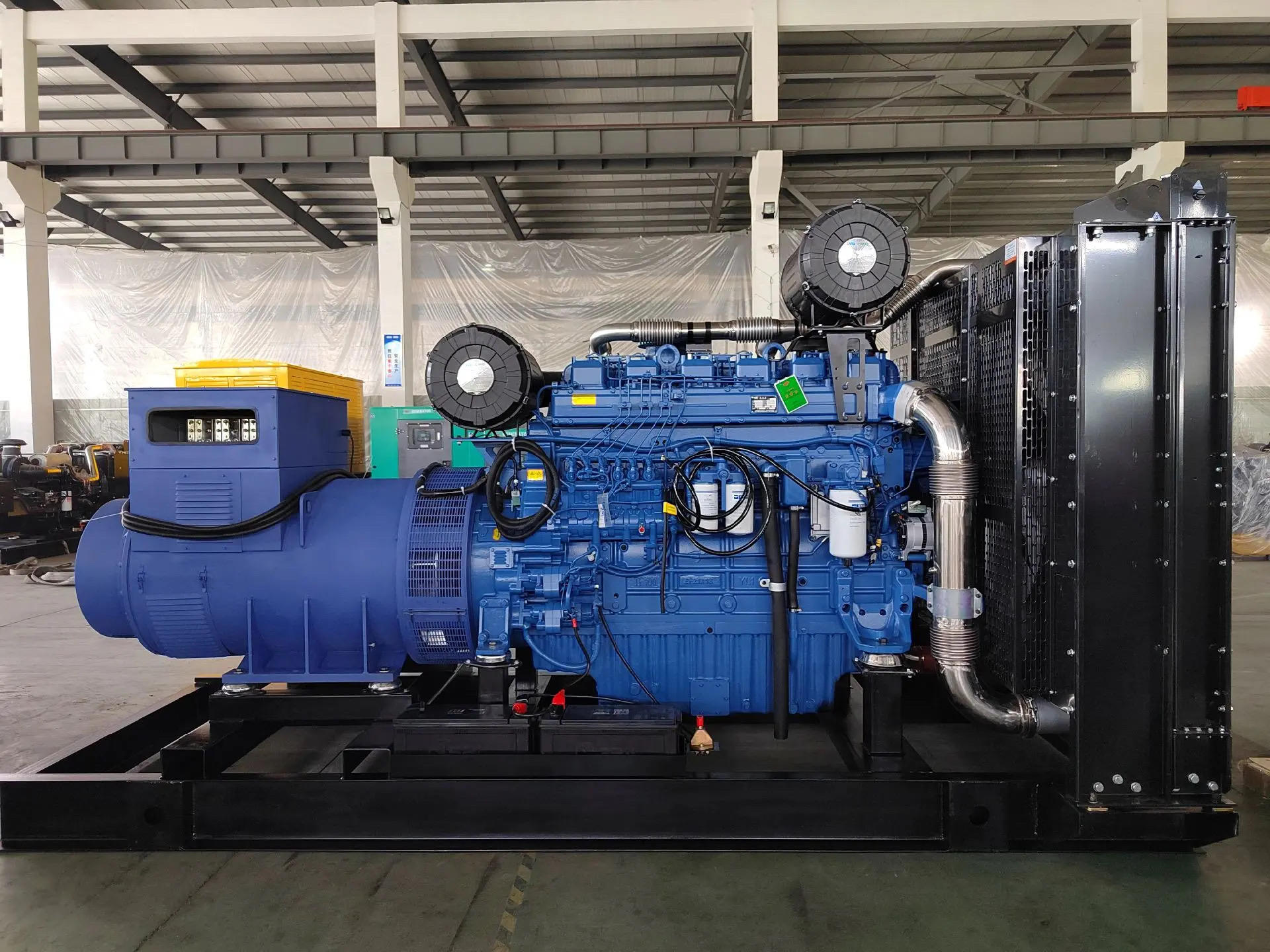
A healthy frame carries the running load at roughly 80% of rating and keeps headroom for the start spikes. A set sized only to the steady draw will sag when the pump starts and may trip the protection. Several mobile generator for construction site manufacturers quote to a load list, but the buyer still has to read the step figure, because the alternator, not the engine, decides whether the voltage holds when the pump kicks in. Our 500kVA silent set with the ATS option is built by Tesla Power Equipment for exactly this mixed draw.
How do you size the set from the load list?
Start from the load list, not from a catalogue number. Write down every tool, its running watts and its starting watts, then group them by the time of day they run. Most sites do not run the welder and the pump at the same minute, so the true peak is lower than the sum of peaks. Add the welfare and office load on top, then apply a margin of about 20% so a new tool does not push the set past its rating.
The arithmetic is the part buyers skip. A 100kVA set serves a light fit-out with a few power tools and a site office. A 250kVA set carries a small concrete batch and the welfare block together. A 500kVA set covers a multi-trade build with a pump and a tower. The published site notes walk through each step, and we quote the load list back to you before the build starts so the offer matches the job.
Which enclosure rating suits a tight city site?
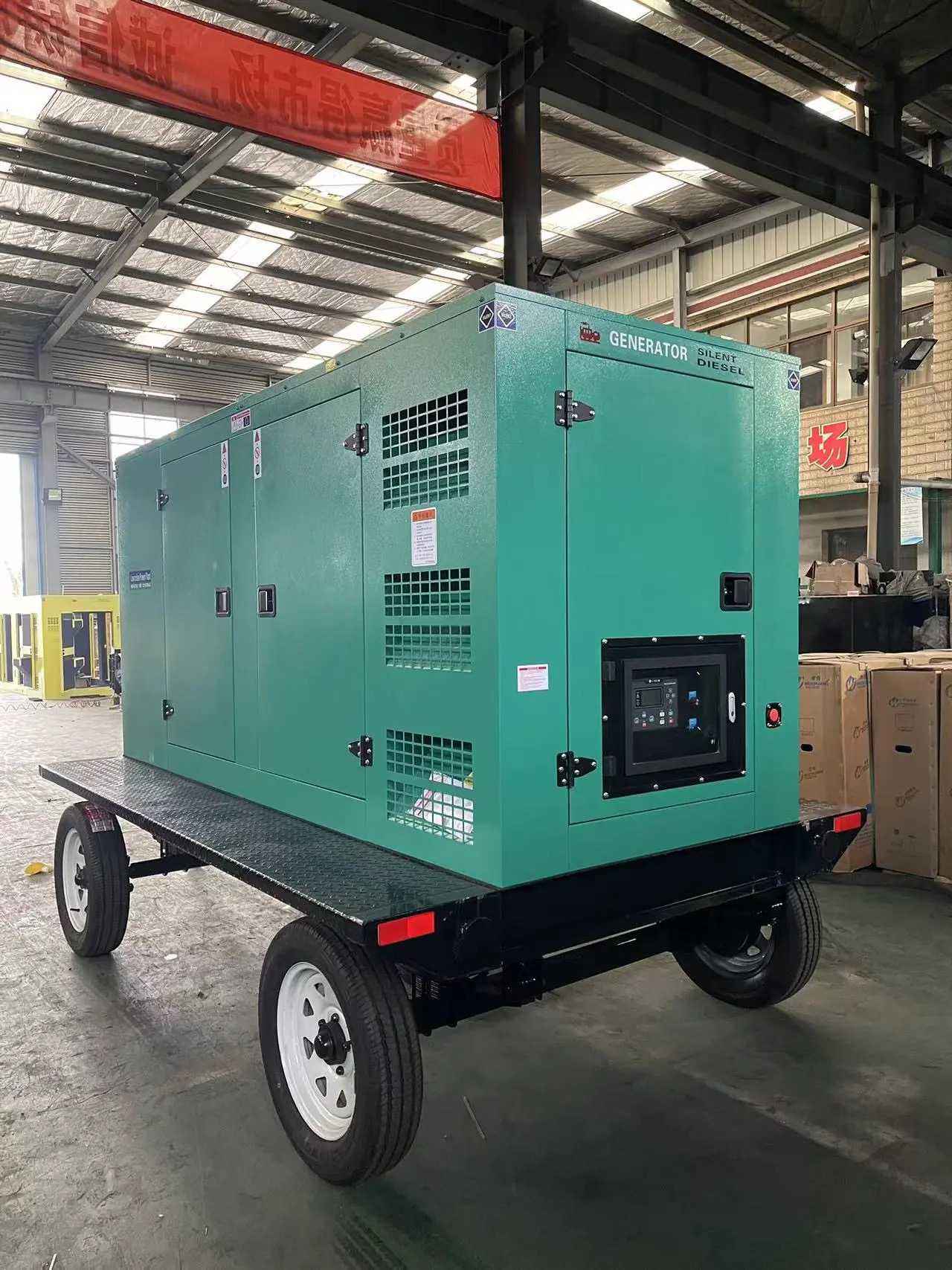
The permit sets the number, not the catalogue. A greenfield site with no neighbours may accept an open frame or a basic canopy. A city centre excavation beside flats needs a silenced enclosure and a low exhaust point. The boundary limit is usually given in dB(A) at a measured distance, and the enclosure must meet it with the set at full load, not at idle.
Two mistakes appear on every rejected hire. The first is quoting the idle noise instead of the full-load noise. The second is measuring at the set instead of at the boundary. A canopy that reads 68 dB(A) at the set can read above the limit at the fence if the site is tight. Yangzhou Tesla Power builds the enclosure to the stated limit and records the test, and the factory profile in our about page states the test distance we use so you can confirm it before you accept the rating.
What does a 500kVA set deliver at 0.8 power factor?
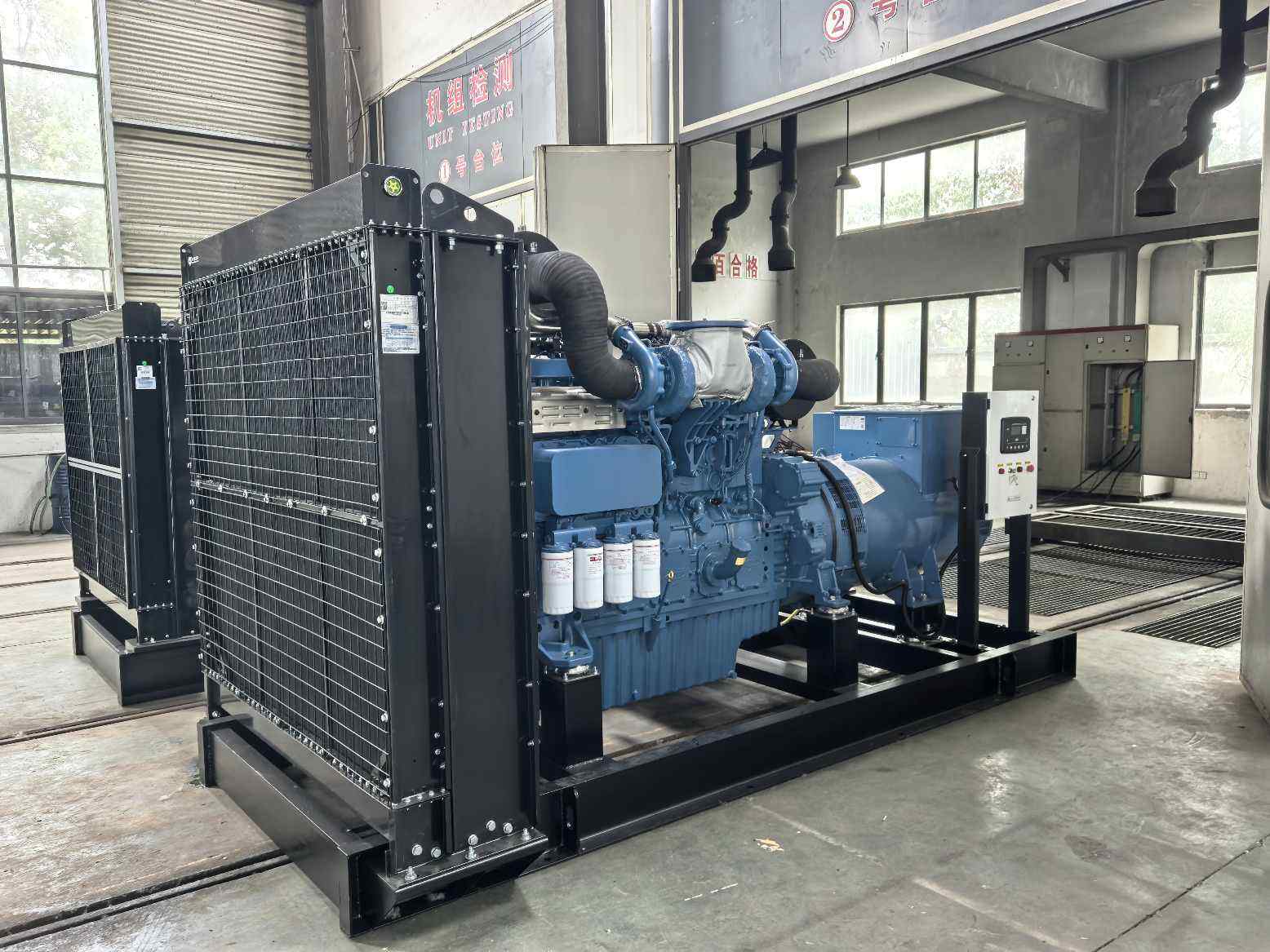
The set rating is given in kVA, but the tools draw real power in kW, and the gap between the two is the power factor. Take the alternator rating of 500kVA and multiply by the power factor of 0.8. The result is 500kVA x 0.8 = 400kW of usable real power that the tools can actually draw. State the power factor on the enquiry, or the supplier will size to kVA and you may pay for capacity the site cannot use.
This single line decides the quote. A buyer who sizes from kW alone may order a frame too small for a motor-heavy day. A buyer who sizes from kVA alone may pay for a larger alternator than the load needs. We quote both figures on every offer, and the load bank test follows the same arithmetic with a longer hold at full load so the rating is proven, not assumed.
How many hours of fuel does a shift need?
Tank capacity is decided by the longest unmanned shift, not by the catalogue default. A 500kVA set at 80% load burns roughly 90 L/h, so an eight-hour shift needs about 720 L before any margin. A 100kVA set at the same load factor burns closer to 20 L/h, so the same shift needs about 160 L. A mobile generator for construction site for the night shift must carry the buffer, because a late fuel delivery should not stop the pour. The table below shows the fuel the common site sizes burn at 80% load, and the tank each shift implies.
| Set size | Load factor | Fuel per hour | Tank for 8 h shift |
|---|---|---|---|
| 100kVA | 80% | 20 L/h | 200 L |
| 250kVA | 80% | 48 L/h | 480 L |
| 500kVA | 80% | 90 L/h | 720 L |
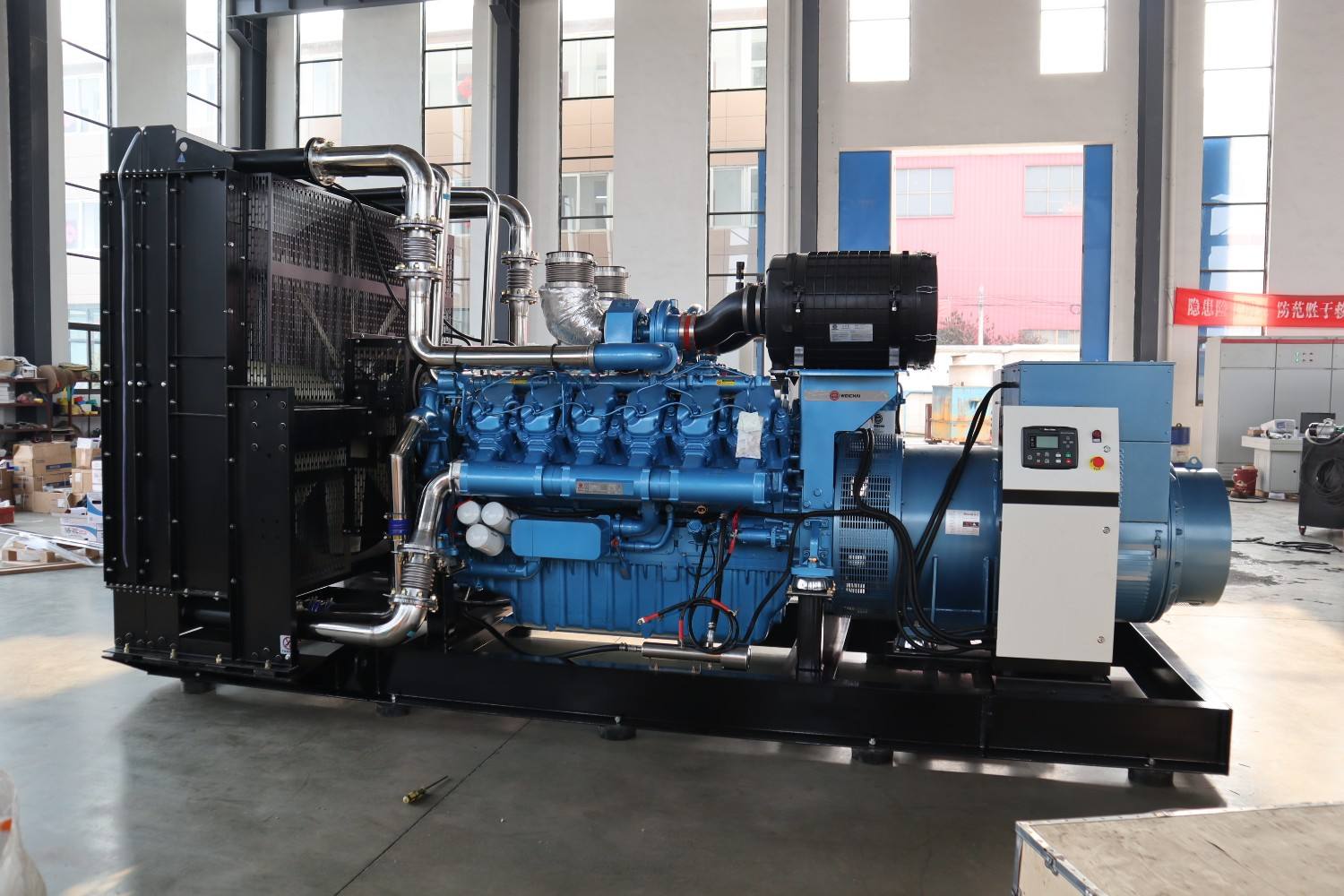
The tank figure is the minimum, not the target. Add a day of buffer so a late delivery does not stop the build, and confirm the fuel return line is sized for the set, not borrowed from another machine. A shared tank that starves at the wrong moment is the most common cause of a mid-shift stoppage on a remote site, and Tesla Power Equipment marks the recommended tank on the offer sheet so the buyer can read it against the shift plan. Buyers comparing mobile generator for construction manufacturers usually start with the load list, and the tank figure belongs on that same sheet so the comparison stays fair.
Where should the set sit on the pad?
Position the set for airflow first and convenience second. The radiator needs a clear discharge and the intake must not recirculate hot air, or the set derates within the first hour. Keep it away from the excavation edge, on firm ground, with the exhaust pointing away from the workforce. A mobile generator for construction site in a tight compound needs extra clearance planning, because the crane and the fuel wagon both need a path in. The same planning applies when a mobile generator for construction in winter runs beside frozen ground, where sump heaters and a longer preheat window change the pad layout. The advice pages cover clearance in detail, and Tesla Power marks the minimum clearance on the skid drawing so the hire supervisor cannot guess.
Leave room for the fuel delivery and for the lift in and out. A set parked where the wagon cannot reach costs a second crane call, and that charge lands on the project, not the supplier. Plan the pad before the set arrives, because moving a 2000kVA frame twice is a bill nobody budgets for. The figure belongs on the offer sheet beside the rating, where a buyer can read it against the site conditions and the permit distance.
One more siting check closes the pad plan, and it is the one item buyers forget when the compound is tight or the access road narrows after rain: Tesla Power recommends a top-out check on every hire — confirm the frame height clears the container door and the site gate before the crane books, because a frame stuck at the fence costs a second crane call the same day.
What documents should the hire pack include?
The pack is the evidence the site manager leans on at handover. It should carry the load calculation, the noise test at the boundary, the fuel curve for the shift, and the maintenance log for the set. Every figure needs the test condition beside it, because a number without its condition is just a claim. Ask any mobile generator for construction site suppliers for the same four documents before you compare tenders, and reject the quote that arrives without them. The mobile generator for construction site documentation for the permit must travel with the set, not arrive a week later.
Keep the commissioning record with the set for the whole hire. A warranty claim on a construction generator lives or dies on that record, and a signature added a month later carries no weight with the engine maker. A conformity assessment for the mobile generator for construction covers the noise test, the load calculation and the emission paper, and each document needs the test condition printed beside the figure. The mobile generator for construction site ce marking requirements are a baseline the buyer can check, but the real proof is the boundary noise test and the load calculation on file. Send our engineering desk a message if your supplier will not release the test sheets, because Tesla Power treats the missing pack as a reason to look elsewhere.
Which mistakes size a site set wrong?
The first mistake is summing every peak. Tools rarely run their start current at the same instant, so the real peak is lower, and a set sized to the summed peaks sits at 40% load and wets its stacks. The second is ignoring the power factor, so the kW the tools need exceeds the kW the kVA frame can deliver. The third is treating the noise limit as a catalogue option rather than a permit condition. Each of these three errors shows up as a stoppage or a complaint, not as a saving. The reference condition is defined in the NFPA 110 emergency and standby power rules, which names the tolerance and the test point the supplier should quote against.
A fourth error is forgetting the shift length when sizing the tank. A set that runs out at hour seven of an eight-hour pour is worse than one that costs a little more to fuel. The spare capacity rules apply to mobile sets exactly as they apply to fixed ones, so read them before you freeze the order. The same frame appears in the 400kW Weichai WP13 product page, where the plate states the same basis and the same test method.
Frequently asked questions about the mobile set
No. A remote greenfield site with no neighbours may accept an open frame, but any site near homes or offices needs a silenced enclosure tested at the boundary distance the permit states. The limit is set by the authority, not by the supplier, and the test must be at full load.
Run the set above roughly 60% load for a block of each shift. A set that idles under light tools all day fails to reach temperature, and the unburnt fuel washes the bores. Size the frame so the normal day keeps it warm and the exhaust stays clean.
Quote the power factor the site load actually presents, usually around 0.8 for a mixed tool and motor load. A test at unity power factor proves the engine but not the excitation under a reactive draw, so state the figure on the enquiry and keep it on the offer.
Often yes for a single trade, but a large multi-trade build may need two sets or a paralleled pair so a fault on one does not stop the whole job. The load bank capacity decides whether one frame is enough, and the answer depends on the start blocks, not the steady draw.
A 100kVA set at 80% load burns about 20 L/h, a 250kVA set about 48 L/h, and a 500kVA set about 90 L/h. Size the baseframe tank from the longest unmanned shift plus a day of buffer, not from the catalogue default that suits nobody.
The supplier should test at the boundary distance and hand over the figure with the condition. If the pack arrives with only an idle number, treat it as incomplete and ask for the full-load measurement before you accept the set on site, because the permit is checked at the fence.
Treat the missing paperwork as a reason to look elsewhere. A set you cannot verify at handover is a liability on a permitted site, and the cost of a stopped build outweighs a small saving on the hire. Tesla Power releases the full pack with every mobile set, and our export desk will reissue the boundary test on request so the site manager has the evidence on file.