
A weatherproof generator enclosure is defined by two ratings, not by the word weatherproof: an IEC 60529 ingress protection grade for dust and water, and an ISO 12944 corrosion class for the steel. An enclosure that passes the first and fails the second rusts from the inside. Compare both with a supplier before you order.
- IP54 keeps out dust and splashing water; IP23 does not, and coastal rain finds the difference.
- Tesla Power checks the paint system against the corrosion class, because salt air attacks cut edges first.
- Ask for the gasket material and the louvre free area on the drawing, then read the airflow notes before the layout is fixed.
- Verify the cable and exhaust penetrations, where most enclosures leak in service.
- Send the site's ambient, humidity and distance to the sea with the enquiry.
What does a weatherproof generator enclosure actually guarantee?
It guarantees an ingress grade for the housing and a corrosion class for the steel, and little else. The word weatherproof has no definition in IEC 60529, so two suppliers can use it for products a grade apart. The grade is what a buyer can compare. The adjective is not.
Ingress protection uses two digits. The first covers solids and the second covers water, so IP54 means dust protected plus splash from any direction. IP23 allows spraying water at up to 60 degrees from vertical, and that angle is the whole story on an exposed pad. None of the digits describe salt, film thickness or gasket life, which is why the corrosion class sits beside them on a data sheet. A plate that reads IP54 without a corrosion category answers half the question, so the two lines belong on one drawing.
Which IP rating suits rain, dust and wash-down?
The rating follows the water the site throws at the canopy, not the budget. A weatherproof generator enclosure for coastal sites therefore carries IP54 as a floor and IP55 on the control panel window. A weatherproof generator for a wash-down yard needs IP55 or IP66, because a jet at pressure passes a gasket that splash does not.
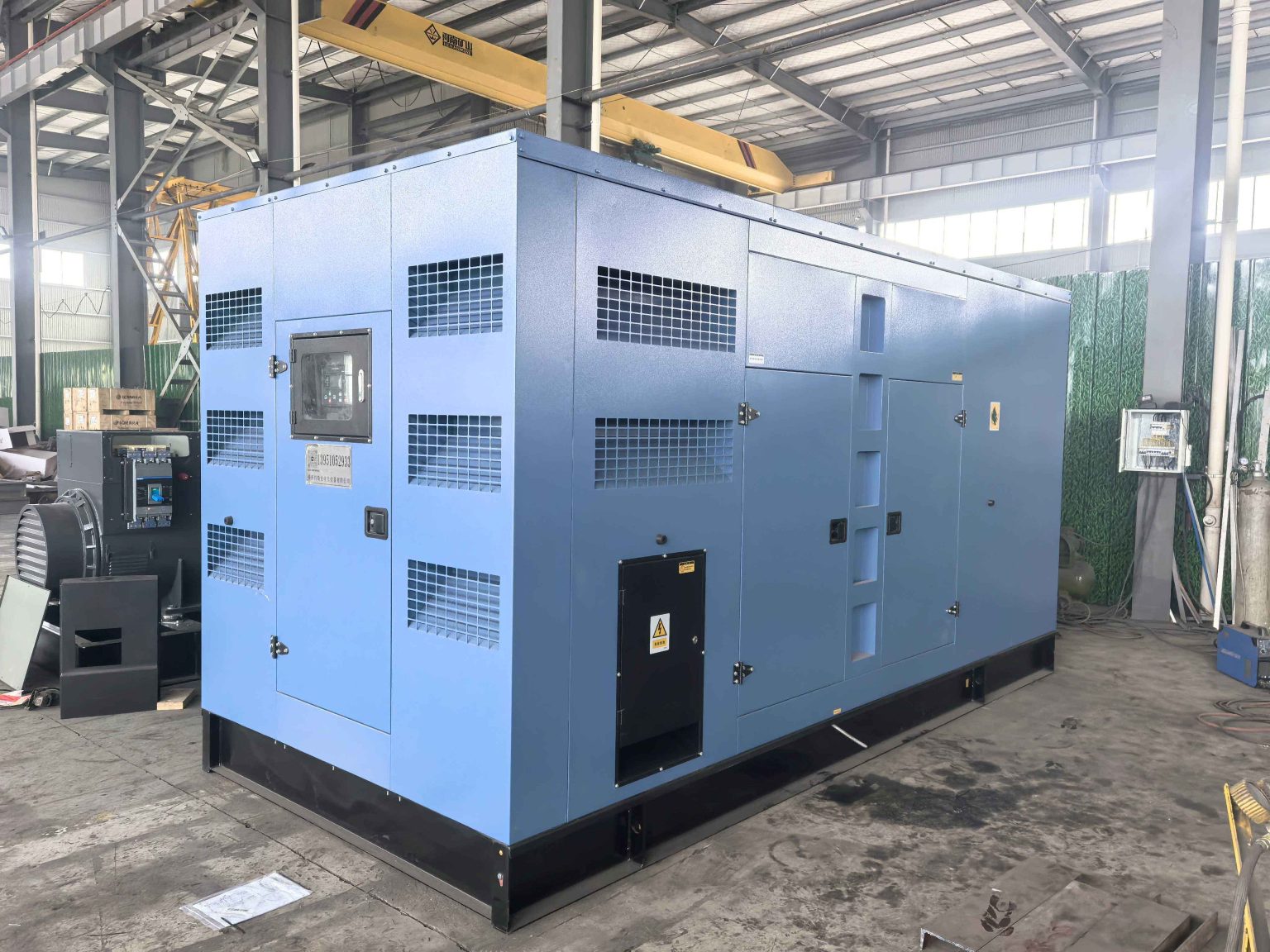
Read the second digit against the test method, not the number. Digit 4 covers splashing water from any direction. Digit 5 covers a 6.3 mm nozzle at 12.5 L/min, and digit 6 covers a 12.5 mm nozzle at 100 L/min, both from any direction. Those figures come from IEC 60529, and an offer that cannot quote them is quoting a marketing grade. The container-type enclosure frames are built to the grade on the drawing, so ask which grade the drawing carries. Tesla Power prints the applied grade on the enclosure plate.
How do the IP grades compare on paper?
The table reads the two digits separately, because most confusion comes from mixing them. A high second digit with a low first digit still lets dust into the alternator, and dust plus damp air is the failure that ends a winding.
| Grade | Solids, first digit | Water, second digit | Enclosure use |
|---|---|---|---|
| IP23 | Fingers and tools above 12 mm | Spray up to 60 degrees from vertical | Sheltered plant room |
| IP44 | Objects above 1 mm | Splash from any direction | Covered pad, light rain |
| IP54 | Dust protected | Splash from any direction | Open coastal pad |
| IP55 | Dust protected | Water jets from any direction | Wash-down yard |
| IP66 | Dust tight | Powerful jets from any direction | Quay, deck, monsoon site |
Which enclosure details leak first in service?
Four details cause most of the water ingress on a canopy that was rated correctly on paper: the cable gland plate, the exhaust penetration, the louvre and the roof seam. Each one is a joint, and every joint depends on a gasket that a fitter cannot see once the canopy is closed.
How does a cable gland plate let water in?
Glands are sized for the cable, and the plate is sized for the gland, so the hole count often exceeds the cable count. A plate mounted below the cable entry collects water around the spare knockouts and passes it through the fixing bolts. Fit the plate above the lowest cable, seal every unused opening and slope the cable into a drip loop before it enters.
Which louvre detail decides whether rain enters?
A louvre sheds water while the blade overlap holds and the air speed stays low. A louvre chosen on face area runs at high velocity, drags droplets past the blades and wets the alternator windings. Ask for the free-area figure and the rain trap on the drawing. Few weatherproof generator enclosure manufacturers publish that figure, which is why the drawing request matters more than the brochure.
How does salt air change the steel specification?
Salt air changes the coating system rather than the sheet thickness, and the ISO 8528-1 standard sits beside ISO 12944 in the same review. ISO 12944 assigns a corrosion category before any paint is chosen. A pad within a kilometre of the sea usually falls into C5, and a quay or an exposed deck into CX. That category sets the blast grade, the primer and the film thickness.
A 3 mm mild steel panel under a C5 system is normal for a canopy of this size. What fails is the preparation: a C5 system needs abrasive blasting to Sa 2.5 and a zinc-rich primer under the intermediate and top coats. Cut edges, weld seams and bolt holes take the thinnest film in any shop, and salt reaches them first. Rounded edges plus a stripe coat on every weld change that outcome, and Tesla Power Equipment lists both on the paint schedule rather than in a brochure.
Worked example: current, heat and hours on a 200kVA canopy
Take a 200kVA standby set at 0.8 power factor, 400 V line voltage and an average load of 60% across 500 hours a year. Real output is 200kVA x 0.8 = 160kW. Line current is 160,000 W / (1.732 x 400 V) = 231 A. Annual energy delivered is 160kW x 0.6 x 500 h = 48,000 kWh.
Those three figures size the enclosure hardware. A 231 A feeder needs a gland plate and a cable entry rated for its diameter, not for the smallest gland in the range. The canopy also has to pass the heat that the cable and the radiator reject. Louvre free area is therefore a number a buyer can check on the drawing, against the fan volume on the data sheet, before the frame is ordered.
How do you verify an enclosure before it ships?
Verification is a list of checks against the drawing, run before the canopy is closed and again after the water test. Confirm the IP grade on the plate, the corrosion category, the dry film thickness readings, the gasket grade and the drain plug position. Ask for thickness readings per panel rather than one figure for the whole set, because the flat panels pass while the edges do not.
Two checks catch most of the failures, and both take under an hour. A water test on the assembled canopy, run at the pressure the grade implies, shows a leaking gland or a pinched door gasket within minutes. A film thickness gauge on a cut edge and on a weld shows whether the shop stripe-coated rather than painted flat. Yangzhou Tesla Power records both results on the enclosure sheet that travels with the set, and our desk signs that sheet before dispatch. The enclosure range lists the grade and category carried by each frame.
Which documents belong in the order file?
The order file needs four documents before the first panel is cut. Ask for the enclosure drawing carrying the IP grade and the corrosion category, the paint system data sheet with the dry film thickness, the gasket and louvre specification, and the water test record. A quotation that names a grade without the drawing leaves the buyer nothing to inspect the delivered set against.
Export paperwork sits beside those four. A CE declaration of conformity covers the machinery and electromagnetic compatibility requirements for the set, and the enclosure rating is a design claim the drawing has to carry. Chinese weatherproof generator enclosure suppliers often quote the grade alone, so ask for weatherproof generator enclosure documentation for export with the offer. Tesla Power puts the drawing revision on the plate as well, so a site team can match the canopy to the file it received.
Where should the enclosure sit on a coastal site?
Place the canopy where the prevailing wind carries salt past the louvres rather than into them, and raise it on a plinth so the door sill stays above standing water. Distance to the sea sets the corrosion category more than rainfall does. A wall 3 m from the louvre face traps spray and turns a moderate exposure into a severe one, so the gap matters as much as the grade.
A weatherproof generator enclosure in a plant room can sit at IP23 only while that room stays dry, which is the one case where a lower grade is defensible. Outdoors, exhaust routing belongs in the same decision. An exhaust that discharges across the louvre face is drawn back into the canopy, and the soot it carries settles on the alternator windings and the radiator core. Point the outlet downwind and at least 2 m clear of the intake, then check that the plume misses the control panel window. Tesla Power checks that angle on the enclosure drawing, and the canopy type decides how much of the routing the frame allows. The NFPA 110 emergency power standard puts housing and ventilation in the same installation review.
Frequently asked questions about weatherproof generator enclosures
IP54 is the usual minimum for an open coastal pad, because it stops dust ingress and splash from every direction. It does not cover a directed hose jet, so a yard that washes equipment down needs IP55 or IP66. The grade is only half the specification, since a C5 corrosion system decides whether the steel survives the same air.
Weatherproof is a trade word with no test behind it, while waterproof implies immersion, which no generator canopy is built for. The measurable terms are the IEC 60529 grade and the ISO 12944 category. Ask for those two, and treat other wording on a quotation as a description rather than a specification. Tesla Power quotes both on the enclosure drawing.
C4 usually covers a site 2 km inland with moderate salt deposition, and C5 starts closer to the shore or on an exposed coast. The category depends on distance, prevailing wind and shelter, not distance alone. A site behind a hill and a site on an open headland at the same distance can land in different categories.
Not on its own. An acoustic canopy adds mass and lining to cut noise, and its louvre and door seals may still be rated at IP23. Noise and ingress are separate specifications that happen to share a frame. Check the IP plate on a silenced set rather than assuming the thicker panels carry a better water rating.
Inspect the door and panel gaskets every year and replace them when they harden, compress or tear, which on a coastal site often happens within three to five years. Sun exposure ages the upper door seal faster than the lower ones. A gasket that leaves a black mark on a gloved hand is already breaking down.
Rarely, and not by adding sealant. The upgrade needs rated door gaskets, a sealed gland plate, louvre rain traps and a controlled air path, which means new panels rather than a repair. A site that needs IP54 should order it, because a field conversion leaves the rating unverified and the warranty unclear.
The buyer and the site engineer should agree the IP grade and corrosion category before the frame is specified, then put both on the drawing. Send the ambient range, the humidity, the distance to the sea and the wash-down routine to the engineering desk for a check against the current frame list. Tesla Power's review starts from the site conditions rather than from a stock grade.