
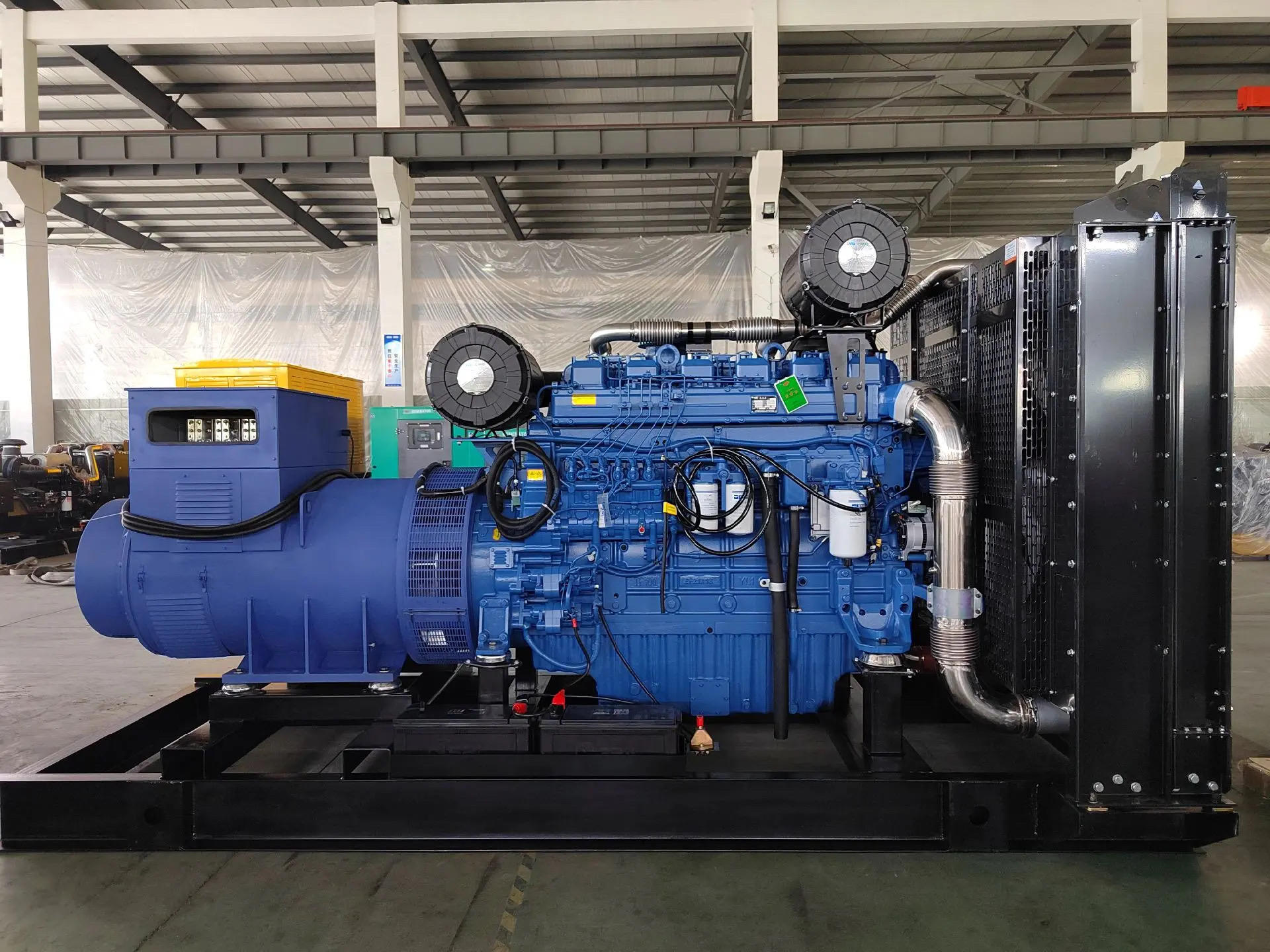
The 100kVA diesel generator carries 80kW at 0.8 power factor, and the load rules for a camp follow from that figure: the largest motor step, the hours spent below 40% of the rating, and the derating that altitude adds. Tesla Power lists the specifications beside the quote so a supplier comparison starts on the same numbers.
- Read the plate as 80kW continuous, not as the kVA figure.
- Size the set against the largest starting step, then check the running load fits between 40% and 80% of it.
- Count the hours a day the camp draws less than 40kW, because that figure decides whether wet stacking becomes a maintenance item.
- Ask for the derating sheet with the offer, and compare it against the 100kVA set built on the WP4 engine before the order is placed.
What do the load rules for a 100kVA diesel generator fix?
They fix three numbers, and every other figure on a camp load list is derived from them. The first is 80kW, the continuous output at 0.8 power factor. The second is the largest starting step the set will accept, which is set by the alternator and the engine governor rather than by the plate. The third is the floor, the load below which the engine runs cold and the cylinders glaze.
Those three numbers sit on one sheet because they pull against each other. A camp that adds a 16kW pump with direct on line starting raises its step without raising its running load, and the set that carries the step then sits at 30% of rating for the rest of the day. The load rules are a balance between the two ends, and we write them before the frame is chosen rather than after.
Does the 80kW figure change with the season?
It changes with the air, not with the calendar. A set rated at 80kW in 25 °C air loses capacity as the intake temperature rises, and a camp in a hot region should read the derating sheet before it accepts the plate. The sheet states the loss per 5 °C above the reference, so the same frame in 45 °C air is a smaller machine than the one tested at the factory.
How does the 80kW rating become a camp load list?
Start with the running load and add the diversity factor afterwards. A 60 bed camp with lighting, a kitchen, two air conditioners and a water pump usually draws 40kW to 60kW in the evening peak, and the same camp draws 20kW at noon when the rooms are empty. The kVA to kW conversion gives the current figure at 0.8 power factor, so a 60kW peak is 75kVA on the plate and leaves the set a quarter of its rating in reserve. Tesla Power writes that reserve on the offer, because the 100kVA diesel generator for the evening peak is chosen on the step rather than on the average.
That reserve is not spare capacity in the usual sense. It pays for the motor step, the voltage dip when a compressor starts, and the load a camp adds in its second year. This is where the 100kVA diesel generator for camp power earns its frame: a set chosen at 110kVA for a 75kVA peak has almost no room to start a pump without the voltage falling below the 10% dip that most control panels tolerate.
- Evening peak in kW, taken from the kitchen and the air conditioning.
- Largest motor in kW and its starting method.
- Daytime floor in kW, which decides the wet stacking risk.
Which loads sit outside the 80kW figure?
Three kinds of load behave differently from the rest and each needs a line of its own on the schedule. Motors with direct on line starting draw six times their running current for a fraction of a second. Rectifier loads from battery chargers and inverter drives pull a current waveform the alternator does not like. Welding sets and air compressors cycle, so their average load says little about the load at the instant they cut in. Tesla Power asks for the starting method of every motor above 16kW for that reason.
| Load | Running draw | What to add for the step |
|---|---|---|
| Lighting and sockets | 20kW | Nothing, the load is resistive |
| Air conditioning | 24kW | 3 times the largest compressor, soft start if fitted |
| Water pump, direct on line | 16kW | 6 times the 20kVA running figure |
| Workshop welding set | 16kW | 2 times running kVA, duty cycle counted |
What does a cold start do to the kVA demand?
A cold morning raises the step before the camp draws any load. Engine oil at 5 °C is thick, the battery has lost a third of its capacity, and the heater in the intake takes current from the same alternator that is trying to build voltage. The set that started in two seconds at noon may crank for eight seconds at dawn, and the camp notices the voltage dip on the lighting circuit.
Two fittings reduce the effect, and both belong in the specification rather than in the after-sales conversation. A jacket water heater keeps the block at 40 °C so the first start resembles a warm start, and a battery charger holds the cranking battery at full charge between runs. Tesla Power specifies both on sets bound for sites above 1,000 m, where the morning air is colder than the camp expects.
- Jacket water heater rated for the local minimum temperature.
- Battery charger with a float stage, not a trickle charger.
- Winter grade oil named in the service book.
The fuel side matters as much in a cold climate. Summer grade diesel begins to cloud at 0 °C and blocks the filter, so a camp that runs through winter needs the grade stated in the delivery contract and a water separator drained at every shift. A frame sold as a 100kVA diesel generator in prime duty carries the same fuel rule, because cold air does not read the rating class on the plate.
Worked example: a camp that outgrew its first set
A 60 bed camp started with a 50kVA set and added a workshop in its second year. The running load rose to 60kW, which is 60kW ÷ 0.8 = 75kVA on the plate. The workshop brought a 40kW pump started direct on line, and that motor takes 50kVA running, so a direct on line start is 50kVA × 6 = 300kVA at the instant of start, three times the old frame.
A soft starter cut the step to 50kVA × 3 = 150kVA, which the next frame up carries with the camp at full load. The 200kVA set then ran the 75kVA evening peak at 38% of rating, so the camp kept the soft starter and moved the pump to a separate circuit. Tesla Power Equipment wrote the starting kVA beside every line of the revised schedule.
How does altitude change the 100kVA diesel generator rating?
Air thins with height, so the engine pulls less oxygen and the radiator moves less heat. A naturally aspirated engine loses about 4% of its output per 500 m above the reference, and a turbocharged engine loses about half that. The alternator loses capacity too, because the same fan moves a smaller mass of air through the frame.
The practical result for a camp at 2,000 m is a set rated at roughly 80% of its sea level figure, which turns a 100kVA frame into a 75kVA machine. A site at that height should buy the frame one step larger rather than run the set at its limit, because the derating applies on the hottest afternoon and not on the day of the test. Most 100kVA diesel generator manufacturers print the temperature column and leave the altitude column empty, so ask for both figures in writing.
Which derating figure applies first?
Temperature applies first in most tropical sites and altitude applies first in most mountain sites. The two combine multiplicatively rather than additively, so a set at 1,500 m in 45 °C air loses more than the sum of the two figures suggests. Ask for the altitude derating figures and the temperature sheet as one document, and check that both are referenced to the same intake condition.
Which protection settings belong on the panel?
Four settings stop a camp from damaging its own set, and each one is a number rather than a switch position. The overload setting sits at 110% of the rating with a time delay, the earth fault setting follows the local wiring rule, the low oil pressure trip sits at the engine maker's figure, and the high coolant temperature trip sits below the boiling point at the site altitude. Tesla Power enters all four in the commissioning record, because a trip that is set at a round number is a trip that either fails to act or acts on a healthy set.
- Overload at 110% of 100kVA with a 20 second delay.
- High coolant temperature trip set for the site altitude.
- Low oil pressure trip at the engine maker's figure, not a round number.
- Under-frequency trip at 47 Hz on a 50 Hz set.
What does a load bank test prove on this frame?
It proves the set can hold its rating for an hour, which a camp load cannot do because the camp load varies. A resistive load bank at 80kW holds the engine at full load while the technician reads the exhaust temperature, the coolant temperature and the frequency, and those three figures show whether the cooling package and the fuel system meet the plate. The duty classes behind those readings are defined in the ISO 8528-1 duty classes, and a camp that files the sheet against the class reads its own test record correctly.
A US project files the same record beside the NFPA 110 standby classes, which is where a hospital or a data hall states the time it allows the set to accept load. The test itself follows the same shape at either site: four 15 minute steps, with a reading at the end of each one.
The record matters more than the test itself once a claim is opened. A camp that files the four steps with the ambient figures can show what the set did in the air it actually breathes, and a supplier reading that file has no reason to argue about the derating. The same file answers the first question a warranty desk asks, which is whether the set was running inside its rating when the fault appeared.
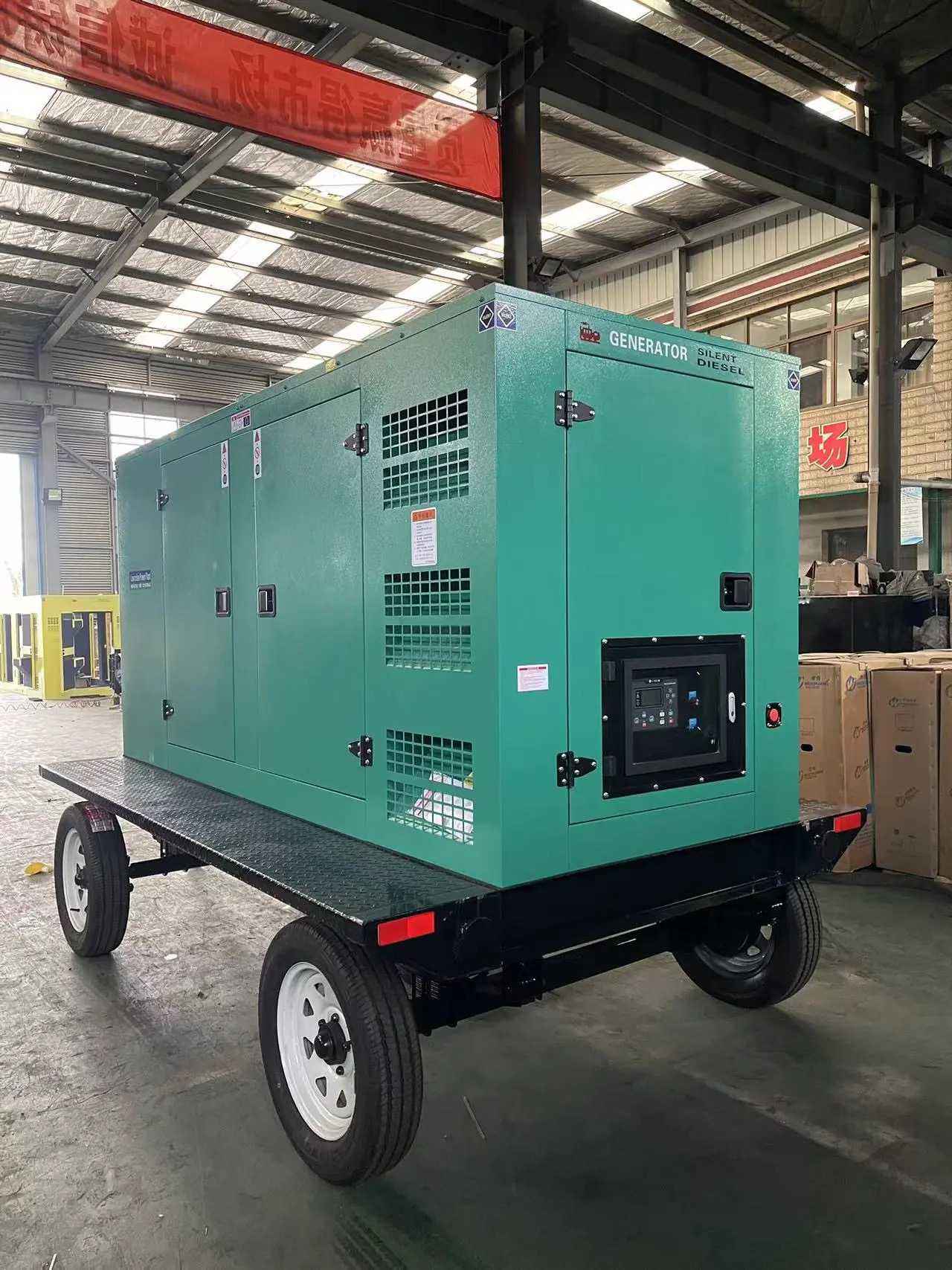
The test is also the moment a camp learns its fuel figure. At 80kW the engine burns about 0.21 L/kWh, so 80kW × 0.21 L/kWh = 16.8 L/h, and a 1,000 h year takes 16,800 L. A camp that budgets from the no-load figure will be short by half, because the no-load burn on this frame is close to 4 L/h and tells a buyer nothing about the cost of running loaded.
How long should the test run?
An hour at full load is the usual minimum for a factory acceptance test, split into four 15 minute steps so the technician can watch the temperature settle at each one. A site acceptance test runs two hours because the fuel and the ambient air differ from the factory. The load bank test procedure sets out the readings to record at each step.
Which documents travel with the set?
Five documents decide how fast a camp can commission the set and how easily it can claim later. The unit test sheet shows the rating at the factory, the wiring diagram shows the panel as built, the derating sheet shows what the site air does to the rating, the service book shows the intervals, and the declaration of conformity supports the customs entry.
- Unit test sheet with the load bank readings.
- Wiring diagram and the protection settings as commissioned.
- Declaration of conformity and the customs classification.
Ask for the engineering notes on site power beside the file, because a camp that understands the derating sheet reads its own load list more carefully. Chinese 100kVA diesel generator suppliers often send the file as a folder of loose PDFs, so check that the declaration of conformity sits in the same folder as the test sheet before the container is booked. Tesla Power Equipment issues all five documents with the set and keeps a copy against the serial number.
Frequently asked questions about the 100kVA diesel generator
It is enough when the evening peak stays below 60kW and the largest motor starts on a soft starter. A camp with direct on line pumps and a workshop should read the starting step before it accepts the frame, because that figure rather than the average load decides whether the set holds voltage.
About 10 L/h at 40kW, against 16.8 L/h at the full 80kW. The curve is not linear, so a camp that runs at half load for most of the day should budget from the half load figure and keep the full load number for the peak hours.
It can run a single welding set of 16kW with a duty cycle counted, because a welder draws its current in bursts. Two welders on the same frame need a load study, and a camp that welds all day should buy the next frame up rather than run this one at its limit.
Every 250 hours on a set that runs loaded, and every 500 hours on a standby set that logs few hours. A camp that runs below 40% of the rating for long periods should shorten the interval, because cold running puts more soot into the oil than full load does.
An open frame set at 7 m is close to 85 dB(A), and a canopy set is close to 70 dB(A). A camp with sleeping quarters inside 30 m should specify the canopy and check the figure at the boundary rather than at the set.
A set of this size on a skid fits a 20ft container with room for the fuel tank and the spares box, and the canopy version fits with the doors closed. Ask for the shipping dimensions with the offer, because a set that fits the container on paper can still fail on the lifting points.
The load rules for this frame are short enough to write on one page, and the page is worth keeping beside the panel. Send the camp load list to our export desk with the largest motor and its starting method, and the reply will name the step, the running load and the derating figure for the site altitude. Tesla Power keeps the 100kVA diesel generator documentation for customs on file, so the conformity assessment for the camp installation is answered from the same folder.