
40ft container generator specifications cover the frame inside a standard box, the door height, the floor loading and the fuel tank. Tesla Power designs the set around the container rather than into it, and the figures below are the ones a quote should name before the box is booked.
- Check the door height first, because a canopy that clears the floor can still foul the header.
- Read the floor loading in kg per metre, not as a total payload.
- Fix the tank position, because a tank at one end shifts the centre and the axle load.
- Compare the build against the 1,000kW set built for a hospital before the container is ordered.
Which figures belong in 40ft container generator specifications?
Seven figures decide whether a set fits a standard box, and a design that skips one is a design that returns from the port. The internal length and width, the door opening, the internal height, the floor loading, the lashing points, the fuel tank volume and the cable entry position are the seven. A set designed without the cable entry ends up with a hole cut in the wrong wall.
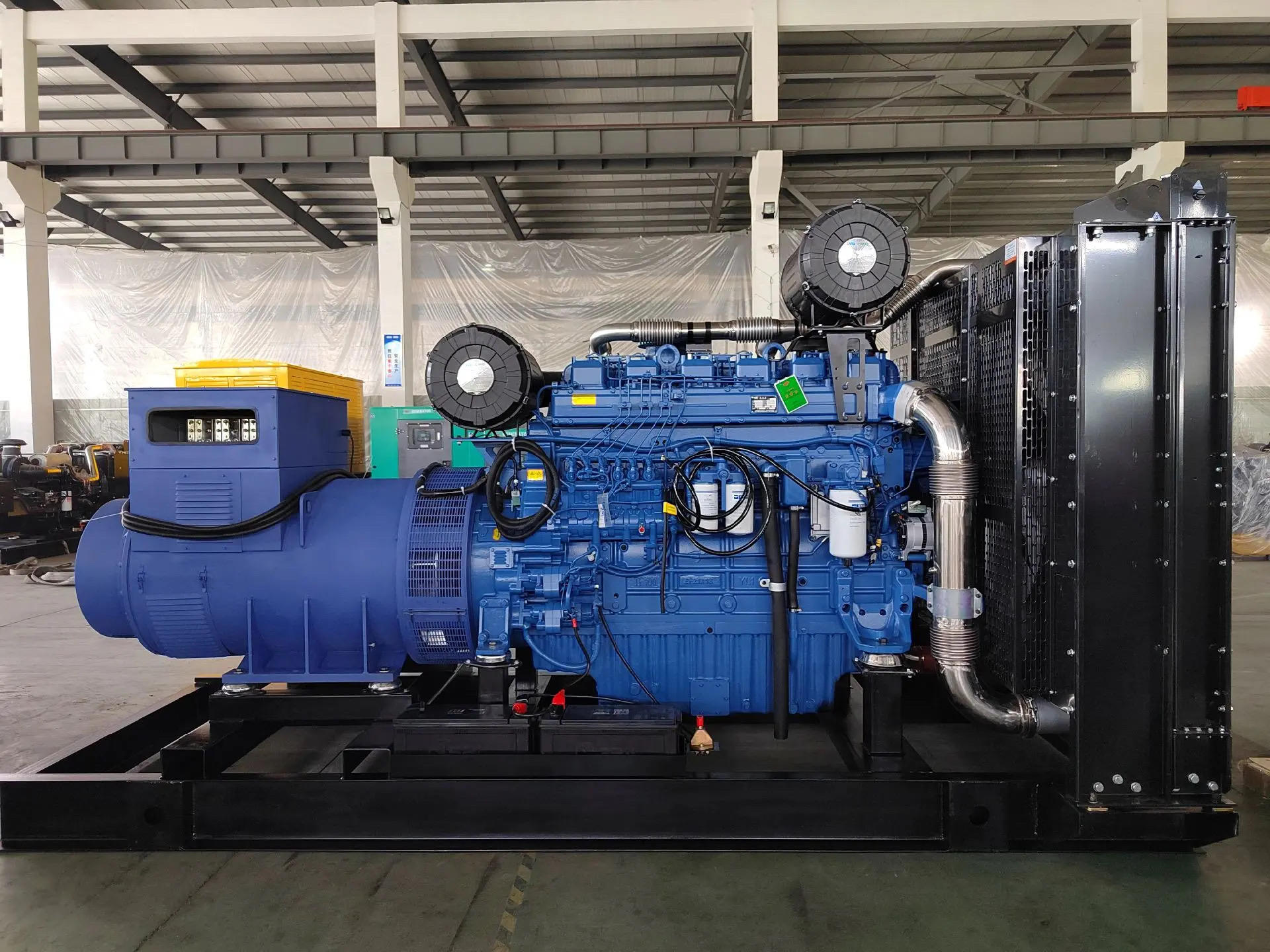
The box itself is fixed, so the set is designed around it. A 40ft high cube gives 2,655 mm of internal height against 2,393 mm for a standard box, and the extra 262 mm is often the difference between a canopy that fits and one that has to be built in two pieces. Tesla Power quotes the box type before the frame, because the box decides the frame and not the other way round, and a 40ft container generator for the port is designed on the box it will sit in.
Does a standard box need structural work?
It needs work at three points: a reinforced floor under the skid, a cable entry cut through a wall, and a ventilation opening sized for the radiator. A container set that keeps the original floor and adds only a cable gland runs hot in summer, because the box has no path for the air the radiator moves.
How is the frame laid out inside the box?
A 40ft container generator in a standard box sits along the length, with the radiator at the door end and the control panel on a side wall. That layout puts the hot air outlet close to the door, where a louvre can be fitted without weakening the roof, and it keeps the panel reachable when the box is on a trailer. A set laid across the width loses 200 mm of usable length and gains nothing.
The fuel tank sits under the skid or in a compartment at the blind end, and the choice decides the centre of gravity. A tank at the door end keeps the weight on the trailer axles; a tank at the blind end puts it on the tractor. Both work, and the transport plan has to know which one was built. The tank position is a design decision, not a detail left to the workshop, and Tesla Power Equipment freezes it on the drawing before the floor is cut.
- Radiator at the door end, with a louvre rather than a grille.
- Panel on a side wall, reachable with the doors open.
- Tank at the blind end or under the skid, named on the drawing.
What does the door height allow?
Door height is the constraint that fails most container designs, because a canopy is taller than the frame it covers. A standard 40ft box has a door opening of 2,280 mm, and a silent canopy for a 1,000kVA set is about 2,100 mm high on its skid, which leaves 180 mm for the skid and the ramp. A super silent canopy at 2,300 mm does not pass the door at all.
The workaround is a high cube box, a split canopy or a set built with the radiator frame lowered. Each costs money, and the choice belongs in the offer rather than in the workshop. A high cube box adds about 8% to the freight and solves the problem outright, which is why most container sets above 500kVA travel that way. The box type is also named in the ISO 8528-1 set classification file, because the rating assumes the air the box provides.
| Item | Standard 40ft | High cube 40ft |
|---|---|---|
| Internal height | 2,393 mm | 2,655 mm |
| Door opening height | 2,280 mm | 2,585 mm |
| Internal length | 12,032 mm | 12,032 mm |
| Floor loading | about 1,000 kg per m | about 1,000 kg per m |
How is the floor loading calculated?
The floor carries the set on a skid, and the load spreads over the skid length rather than the whole box. A 1,000kVA set at 10,200 kg dry on a 5,900 mm skid puts about 1,730 kg per metre on the floor, which is above the 1,000 kg per metre a standard container floor is rated for. The fix is a steel spreader beam under the skid, and it belongs in the design rather than in the freight plan.
The spreader beam does two jobs: it spreads the load over the cross members and it gives the lashing points a rated fixing. A set lashed to the container floor rings rather than to a beam moves in heavy weather, and a shifted set damages the radiator before the ship reaches port. We design the beam with the lashing points on it and photograph the arrangement before the doors close. Tesla Power holds the beam drawing beside the set drawing, so the lashing points and the lifting points cannot be confused.
Does the fuel weight sit on the same floor?
It does when the tank is inside the box, and a full 1,500 L tank adds about 1,260 kg to the load. A tank under the skid spreads that weight with the set, while a separate tank at the blind end needs its own beam and its own lashing.
Worked example: a 1,000kVA container set for rail
A mine asked for a 40ft container generator for rail as well as road, and the rail rule set the frame. A 40ft box on a well car is limited to 2,655 mm internal height, so the set had to clear the standard door at 2,280 mm with the canopy fitted. The frame was built at 2,050 mm with the radiator lowered, and the set delivered 800kW at 0.8 power factor, which is 1,000kVA on the plate.
The fuel figure shaped the tank. At 800kW the engine burns 168 L/h, so a 1,500 L tank carries it for 1,500 L ÷ 168 L/h = 8.9 hours, and the mine needed twelve hours between fills. The second tank went under the skid rather than into a second box, and the floor beam was rated for the pair. The containerized set notes cover the same arithmetic as a checklist.
Which ventilation does the box need?
The box needs an air path sized for the radiator, an outlet above the hot air stream and an inlet at the cool end. A container set without the path runs the coolant at the trip point within an hour at full load, because the box recirculates its own hot air. The intake area is usually twice the radiator area, and the louvre loses half of that again.
A container set is read on the air it receives rather than on the plate, which is why the set is tested inside the box. The path also has to keep rain and dust out, which is why the outlet sits behind a weather hood rather than a plain opening. A site in a dusty region needs a filter on the inlet, and the filter adds a restriction the fan has to overcome. Tesla Power sizes the louvre and the filter together and tests the set in the box before shipment, so the coolant figure in the file is the figure in the box. The fan curve that sizes the louvre is declared against IEC rotating machine standards for the alternator and the engine maker sheet for the radiator.
- Inlet area about twice the radiator area.
- Outlet behind a weather hood, above the hot air stream.
- Filter on the inlet for a dusty site, with the restriction allowed for.
Which cable entry and earthing belong on the drawing?
The cable entry sits on the side wall nearest the load, and its position decides the trench or the tray at the site. A 1,000kVA set at 400 V draws about 1,443 A, so four cables per phase are usual and the entry needs room for twelve glands. A single 100 mm hole is not an entry, and a site that cuts one on arrival voids the enclosure rating.
The earthing point belongs beside the entry, with a stud rather than a bolt through the wall. A container set is a steel box, and the box is bonded to the frame at one point only, so the earth bar has to be visible from the door. The generator room ventilation notes cover the airflow side of the same design, and the engineering notes on container builds list the openings as a checklist.
Which transport rules change the container build?
Three rules change the build and each one is checked before the frame is drawn. A 40ft container generator in a well car sits lower than the same box on a flat wagon, so the height allowance changes with the wagon rather than with the route. The rail loading gauge limits the height on a well car. The road escort rule applies above 4 m overall. The stack rule decides whether the box may travel on top of another, and a container set with a modified roof usually may not.
A box that has been cut for a louvre and a cable entry is no longer a certified container for stacking, so it travels on deck rather than in a stack. That changes the freight rate and the sailing schedule, and a site that plans a stack should know before the order. Tesla Power quotes the box as a modified unit rather than as a container for that reason, and the freight forwarder prices it accordingly. The flat rack shipping notes cover the case where the box is abandoned and the set travels open.
Which documents close a container order?
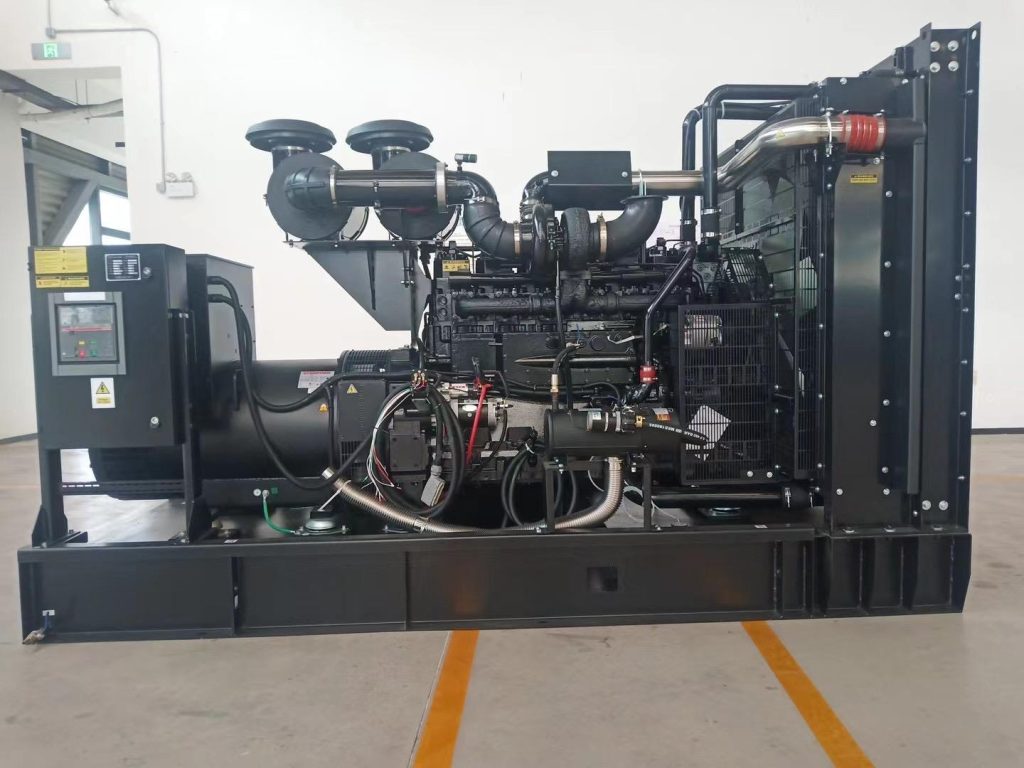
Four documents close the order: the container drawing with the louvre and the cable entry, the unit test sheet from the box, the packing list with the axle load, and the declaration of conformity. A forwarder who has the four books the sailing without a site visit, and a customs broker who has the declaration clears the engine tier without a query.
- Container drawing with the openings marked.
- Unit test sheet recorded inside the box.
- Packing list with the centre of gravity.
Chinese 40ft container generator suppliers often quote a standard box and modify it on the floor, so the drawing is the document that shows what was agreed. Most 40ft container generator manufacturers will issue it before the box is cut, and Yangzhou Tesla Power sends it for signature rather than for information. The 40ft container generator documentation for customs travels with the same file.
Frequently asked questions about 40ft container sets
Only when the frame and the canopy are designed for the box. A standard 1,000kVA canopy is taller than the door, and a 500kVA frame leaves more empty length than the freight justifies, so the box suits a frame between those two points.
It is usually quieter by a few dB(A), because the box adds a second wall. The gain is small against the cost, so a site that needs a low noise figure should specify a super silent canopy inside the box rather than rely on the container alone.
Some ports and some insurers ask for it, and the rule follows the fuel volume rather than the power. A set with a 1,500 L tank inside the box usually needs a suppression system, and a set with the tank outside does not.
Between 12% and 20% of the set, depending on the modifications and the box type. The high cube box and the floor beam are the two items that move the figure most, and both are quoted as lines rather than as an allowance.
It can when the layout leaves 800 mm beside the engine and the panel door opens fully. A set packed against a wall cannot be serviced, and the fix at that point is a crane rather than a spanner, which is why the service clearance is drawn on the container plan.
It rises slightly, because the fan works against the louvre and the box runs warmer than open air. The difference is about 2% at full load, and the derating sheet for a container set states the ambient inside the box rather than outside it.
Design the set around the box: door height, floor loading, air path, cable entry. Send the route, the box type and the power to our export desk and Tesla Power will return the 40ft container generator specifications with the openings and the beam on one drawing. We keep the drawing and the test sheet against the serial number, so a second box matches the first.