
A diesel generator supplier Nigeria buyers can verify before payment beats the lowest quotation on the table. Run these nine checks while the quotation is still open: confirm the duty class, the voltage and frequency, the fuel data and the documents that travel with the set. Every answer belongs in the written order before you sign it.
- Ask Tesla Power for the document list we publish with every export offer.
- Confirm the rating class on the quotation, not the marketing brochure.
- Check the set against 230V and 50Hz, the Nigerian supply standard.
- Recalculate the quoted fuel burn from the load you actually run.
- Match the packing, documents and inspection terms to the order value.
Does the diesel generator supplier Nigeria quote state the duty class?
Quotations that show only a single kW figure hide the rating class, and the class decides how many hours a year the set may carry load. The ISO 8528-1 rating definitions divide output into emergency standby, prime and continuous duty, and our prime and standby duty class guide puts the three classes side by side. A 500kVA standby set is not a 500kVA prime set, even when the nameplate reads the same.
Ask the supplier to print the class beside every power figure on the offer. A diesel generator for standby duty covers short grid outages, while a diesel generator for construction sites carries a variable load through every shift. A set quoted for standby duty will be overloaded within a year on a site that runs it daily, so ask for the load factor and the annual hours the class assumes. Compare that against the site duty cycle before the order is placed.
| Rating class | Typical site duty | Load pattern |
|---|---|---|
| Emergency standby | Grid outages only | Variable, short runs |
| Prime | No grid supply | Unlimited hours, variable |
| Continuous | Base load supply | Steady load around the clock |
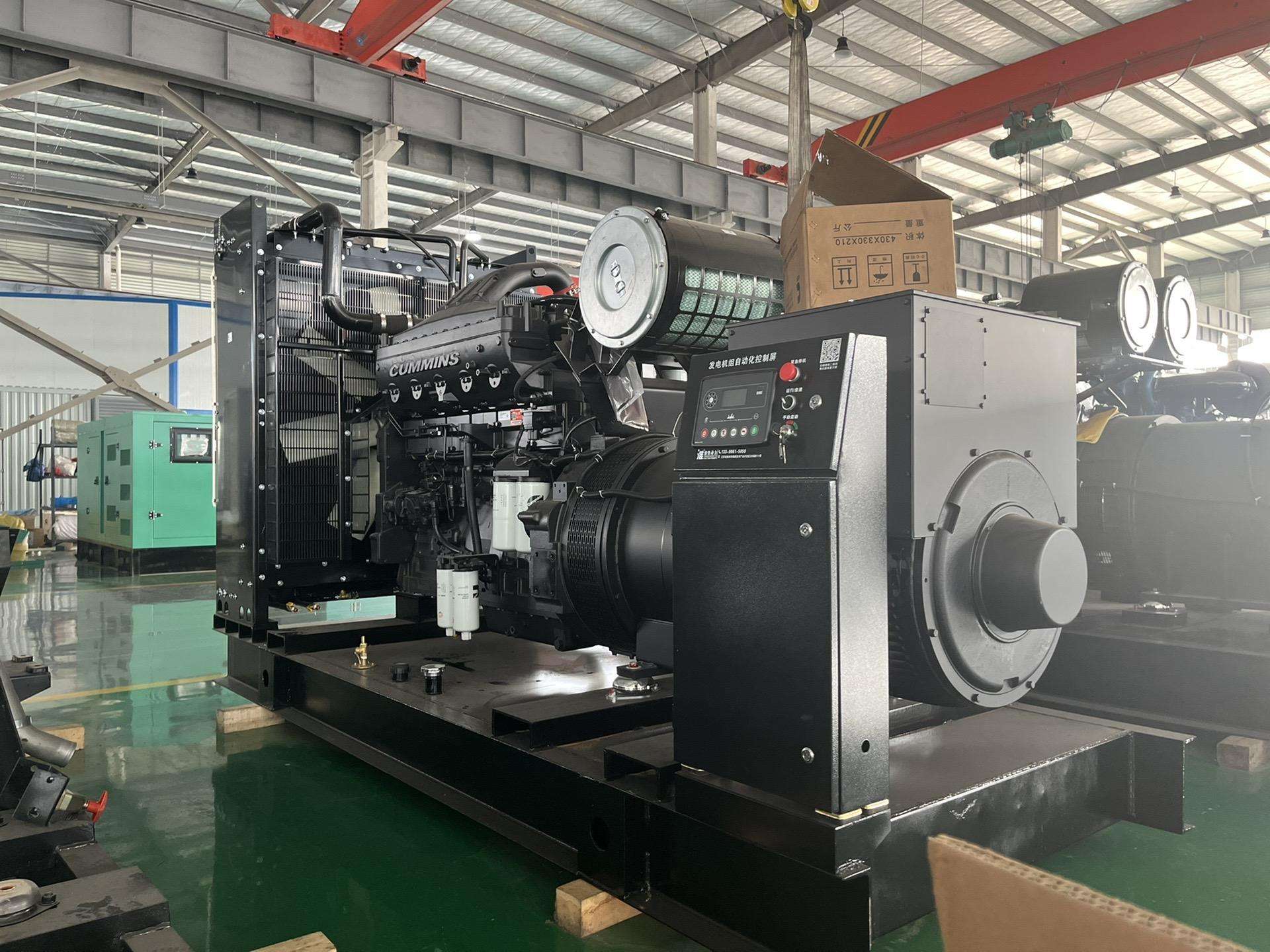
Does the set match Nigeria's 230V 50Hz supply?
Nigeria's public supply runs at 230V phase to neutral and 400V between phases at 50Hz. An alternator built for a 60Hz market turns at 1800rpm, while a 50Hz machine turns at 1500rpm for the same pole count. Connecting a 60Hz set to a 50Hz grid changes the cooling, the voltage regulation and the speed of every motor it feeds.
Ask for the nameplate voltage range and the tap changer positions in writing. A wide tap range covers the voltage swings that follow a grid disturbance, and the automatic voltage regulator has to hold the output inside the band the site equipment expects. Pumps, compressors and motors bought locally are wound for 50Hz, so confirm the frequency before the alternator is ordered and check the standard 50Hz builds in the catalogue.
What ambient temperature is the power rating based on?
Most power figures are quoted at a reference condition, and ISO 3046-1 sets out how to correct them for the site. A diesel generator in Nigeria spends much of the year above 40°C intake air, and the same engine breathes less oxygen while the radiator rejects less heat. The quoted output falls away as intake temperature rises, so the corrected figure is the one to compare.
Ask which reference temperature the data sheet uses, and request the derating curve for the frame. Altitude matters as well: every 300m above the reference level costs further output, and highland sites sit high enough for the correction to show on the quotation. Write the corrected kVA figure, the intake temperature and the site altitude on the order. Tesla Power states the reference conditions on every data sheet it issues.
Can you check the quoted fuel consumption with one calculation?
Fuel burn is the number buyers check least and pay for most. Take the quoted kVA, multiply by the power factor to get real power, then apply the specific consumption from the data sheet. For a 400kVA set at 0.8 power factor, 400kVA x 0.8 = 320kW, and at 75% load the engine carries 240kW. At 0.28L/kWh that is 240kW x 0.28 = 67L/h, or 670L across a ten hour evening peak.
Run the same arithmetic on every quotation, using the load factor the site actually sees. A set that burns 67L/h at 75% load and 90L/h at full load is behaving normally; a quote that shows the same figure at every load point is a copied number. Ask which load point each figure belongs to and record it beside the price. The 500kVA silent diesel generator set carries the fuel curve at four load points.
| Load point | Real power | Fuel burn | Volume over 10h |
|---|---|---|---|
| 25% of rating | 80kW | 26L/h | 260L |
| 50% of rating | 160kW | 48L/h | 480L |
| 75% of rating | 240kW | 67L/h | 670L |
| 100% of rating | 320kW | 90L/h | 900L |
Are the packing and shipping terms written into the order?
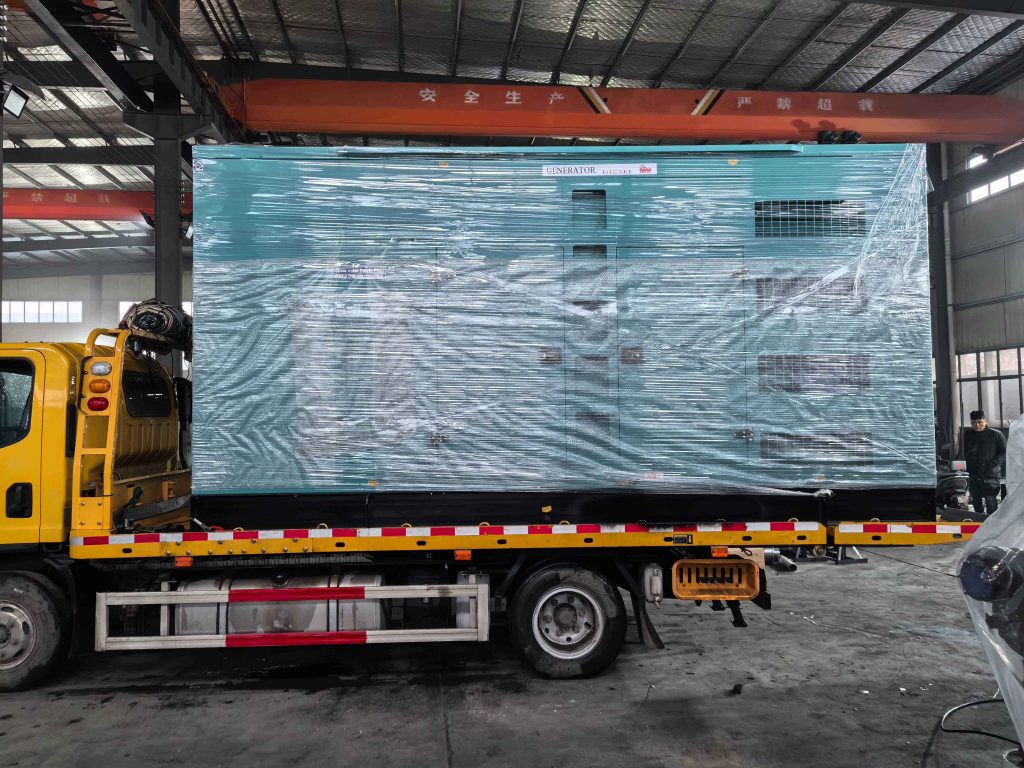
The enclosure type sets the freight cost before the engine is built. An open frame set needs a crate and a dedicated lift, a containerised set travels as a standard box, and an oversize set goes on a flat rack with the dimensions agreed in advance. The crate dimensions follow the frame, the skid and the lifting points, so they are fixed once the set is built.
Write the packing specification into the order: crate or no crate, waterproof lining, desiccant, lifting points and the paint system for sea freight. Our notes on oversize genset shipping on flat racks cover the checks that keep an out-of-gauge shipment moving. Salt air on the coastal route attacks bare steel quickly, and a repaint at the port costs more than the paint specification does. Tesla Power Equipment lists the packing standard on every offer it sends.
Which documents must travel with the set?
A generator that arrives without its papers cannot be cleared. The diesel generator documentation for import covers the commercial invoice, the packing list, the bill of lading, the test report and the data sheets for the engine and the alternator. Nigeria's conformity assessment programme adds its own certificate for regulated products, so confirm the current route with your clearing agent before the container seals.
Ask for the certificate of origin early, because it decides the duty treatment and it cannot be issued afterwards. Keep a scanned set of every document in the project folder, and a second copy with the site team. A diesel generator supplier for export projects sends the same pack with every order, and the gaps show up at the port rather than at the factory.
What does pre-shipment inspection cover, and who signs it?
Inspection is the last chance to catch a mismatch while the set is still at the factory. Walk the nameplate against the order, check the paint and the wiring terminations, watch the test run and read the recorded figures. A third party will check the same items from the outside, so the record has to stand on its own.
Agree who signs the report and what happens when an item fails. Our pre-shipment inspection checklist lists the items a third party checks on your behalf, and the photographs worth keeping. A failed inspection with a documented correction is a normal part of a build; a signed report with no notes is worth very little. Hold the balance payment against the inspection release, and keep the release letter with the shipping documents.
Are spares, tools and the warranty scope listed on the order?
Spares and tools are cheap at the factory and expensive to airfreight later. Ask for the recommended running spares, the special tools the set needs for service, and the consumables for the first service interval. The kit list belongs in the quotation rather than a separate email, and the factory ships the same structure with every export order.
Read the warranty scope line by line: what it covers, what it excludes, and what the site team must do to keep it valid. Service intervals, oil grade and load records all sit inside the scope on most engine makers' terms. Keep the service log from day one, because a missing log is the usual reason a claim is refused. Yangzhou Tesla Power writes the service intervals into the handover pack.
How are payment stages tied to shipment milestones?
Most generator orders move in stages: a deposit releases materials, a second payment follows the build, and the balance falls due against the inspection release and the shipping documents. The stages are a control on quality rather than a formality, and each one needs a written trigger. Ask what each stage covers, which document releases it, and how a diesel generator manufacturer handles a stage that slips.
Keep the triggers objective: a signed inspection report, a dated bill of lading, a photographed crate. Vague triggers turn into delays at the port, and a set sitting on the quay accrues charges that nobody budgeted. Send the finished order sheet and request a scoped quotation; the reply comes back as a priced proposal with the data sheets attached. Tesla Power answers with the same nine points filled in.
Common questions before a diesel generator order for Nigeria
Prime duty, or continuous duty when the load stays steady. Standby duty assumes short outages with long rests between them, so a daily run of several hours falls outside it. Match the class to the annual hours and the load factor the site will see, and have the supplier print the class beside every power figure on the quotation.
Not as built. A 60Hz set turns at 1800rpm and its alternator is wound for that speed, so on a 50Hz grid the voltage, the cooling and every motor connected to it run off specification. The fix is a 50Hz machine turning at 1500rpm, ordered with the right nameplate from the start rather than adapted on site.
At 0.8 power factor a 400kVA set delivers 320kW, and at 75% load it burns about 67L/h when the data sheet shows 0.28L/kWh. The figure moves with load, altitude and intake temperature, so treat the data sheet value as the planning number and log the real burn from the first tank to see where the site actually sits.
The commercial invoice, packing list, bill of lading, test report and the engine and alternator data sheets travel with the set, and our certificate of origin requirements note explains which form decides the duty treatment. Conformity assessment for the Nigerian market runs through the national programme, so confirm the current certificate route with your clearing agent. Tesla Power sends the same document pack with every export order.
A current ISO 9001 registration shows the factory runs a documented quality system, and it is a fair question to put to any supplier. It does not replace the inspection report, the test record or the data sheets. Ask for the registration number and the expiry date, then verify both with the issuing body before the deposit is released.
Compare them line by line rather than on the headline price: rating class, voltage and frequency, fuel burn at a stated load, enclosure type, spares, documents and warranty scope. Most diesel generator suppliers in China build from the same engine data sheets, so the gap between two offers sits in the scope lines rather than the headline price. Two offers that differ on those lines are not the same machine.
The test report, the data sheets, the wiring diagram, the spare and tool list, the warranty scope and the service schedule. File the pack on arrival and write the serial number on every page, then line the documents up the way the genset RFQ checklist does. Tesla Power keeps the same folder structure on every project so the site team can find a document without asking.