
A genset RFQ checklist turns a scattered enquiry into a specification a supplier can price in one pass. It fixes the load, duty, site and compliance data so quotes come back comparable, and it lists what Tesla Power's engineering team needs beside your request for a scoped quotation.
- State the load list with kW, kVA and the largest motor start.
- Name the rating class: standby, prime or continuous under ISO 8528-1.
- Give site ambient, altitude, enclosure and the noise limit you must meet.
- Ask for the data sheet, test report and emission papers with the offer.
What is a genset RFQ checklist?
A genset RFQ checklist is the request for quotation sheet for a diesel generator set, and it lists every input a supplier needs to price the machine: the load list, the rating class, the site conditions, the electrical details, the compliance papers and the commercial terms. Filled in once, it replaces the long email chain that usually follows an enquiry, and it gives both sides the same picture of the scope.
The checklist is not a purchase order. It states what the set must do, not what it will cost, so every supplier prices the same machine. That distinction matters because the expensive mistakes happen before the quote arrives: a site quoted on the wrong rating class, an enclosure priced against the wrong noise limit, a fuel tank sized for the wrong runtime.
Why do two quotes for the same set differ so much?
Suppliers fill gaps with assumptions, and assumptions differ. One reads a hospital load as continuous duty and prices a larger frame; another reads the same list as standby duty and quotes a smaller set on the same engine. The gap between those two readings can reach 30% on the same project, and neither supplier has made an error on the numbers as given.
A completed sheet closes those gaps. It names the rating class, the site conditions and the test each offer must include, so the comparison becomes arithmetic rather than opinion. It also shortens the reply cycle, because genset manufacturers answer a full sheet in one pass instead of three rounds of clarifications that each add a week. Tesla Power Equipment reviews the sheet before quoting, so the frame is chosen against the load rather than against a guess.
Which load and duty details must the RFQ state?
The load list is the heart of the sheet. Every connected load appears with its running kW and kVA, the load factor it carries, and whether it runs continuously or in short bursts. Motors get their starting method and the largest single start, because the starting current sets the alternator frame. State the power factor of the site load, so the kW and kVA figures describe the same demand.
Then name the rating class. ISO 8528-1 defines the rating classes that decide which kVA figure a supplier quotes, and the same engine carries a different number under each one. The ISO 8528-1 rating definitions are public, and quoting them in the sheet removes the largest single source of price spread between offers.
Check 1: the load list. One row per load, three columns: running kW, running kVA, daily hours. Add a fourth row for the largest motor with its start method, and mark any loads that start together. A list like this takes an hour to build and saves the two-week loop of revised quotations that follows an incomplete one.
Check 2: the rating class. Three classes cover most projects. A genset for standby duty runs only when the utility fails; a genset for prime power carries a variable site load all year; a genset for continuous base load holds a constant output without stopping. Naming the class in the sheet fixes the kVA figure the quotes will be built on.
| Duty class (ISO 8528-1) | Load pattern | Typical project |
|---|---|---|
| COP | Constant load at 100% of rating, unlimited hours | Base load and continuous export duty |
| PRP | Variable load, average not more than 70% of rating over 24 h | Construction, rental and export prime power |
| ESP | Standby duty, average not more than 70% of rating over 24 h | Backup to the utility |
The same engine wears three different kVA figures across those classes, and the standby number is usually the largest. State the class before asking for a price, and ask each supplier to quote the class you named rather than the one that flatters the offer. When the site duty is mixed, list the share of the day each class carries.
Which site conditions change the quoted rating?
Ambient temperature and altitude change what a set can deliver, so the sheet carries the site design conditions rather than the country name. State the design ambient, the altitude above sea level, and whether the set sits outdoors, in a shed or in a container. A site at 1000 m and 40 °C needs a derated frame that a sea-level quotation will not cover.
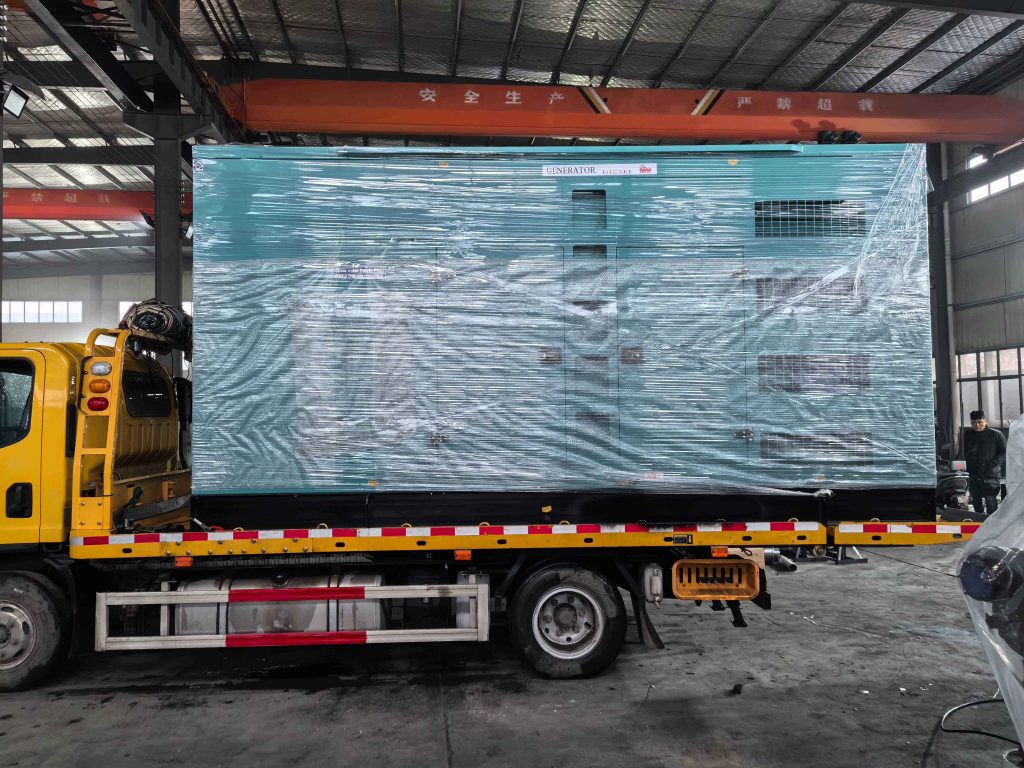
The enclosure and the noise limit belong in the same answer. State the maximum dB(A) at 7 m the site must meet, the dust and rain exposure, and whether the set is skid-mounted, containerised or trailer-mounted. These three answers decide the canopy, the radiator position and the airflow path, which is why a canopy price cannot be compared until they are written down. Tesla Power prices the canopy against the stated limit, and the layout drawing shows the airflow path before the order.
Check 3: ambient and altitude. Give the design ambient and the altitude as numbers, not as a climate description. The derating curve the supplier applies comes from the engine maker, and our site derating for altitude and ambient notes show how the same set loses output as air thins and warms. A derated quote is not a higher margin; it is the honest number.
Check 4: enclosure and noise. A limit of 75 dB(A) at 7 m is a common residential boundary, and a weatherproof canopy with an IP54 rating suits most outdoor sites. State the limit as a number and the enclosure as a type, then let each supplier show how their canopy meets it. An exhaust stack aimed at the fence line defeats the quietest canopy on the list.
Which electrical and control details belong in the RFQ?
Voltage, frequency and phase anchor the electrical section: a 400 V 50 Hz three phase load is the common export default, and 480 V 60 Hz suits the Americas. Add the breaker size, the cable entry direction, the earthing arrangement and the alternator connection. Any site that already runs a UPS or a soft starter should say so, because those loads pull a different transient response from the set. Tesla Power marks the transient class on the data sheet beside the rating.
Control and starting come next. State whether the set starts automatically on mains failure, the transfer time the load can accept, and the switches the site team actually needs on the panel door. A standby diesel generator set with an automatic mains-failure panel covers a hotel or a clinic without added hardware.
Check 5: voltage, frequency and phase. Write the voltage, the frequency and the phase count as the load needs them, then add the largest motor and its start method. A direct-on-line start pulls roughly six times rated current, so the supplier checks the voltage dip against the alternator reactance. When the dip exceeds 15%, the honest fix is a larger frame rather than a higher excitation setting.
Check 6: control, starting and protection. Ask for the alarm list, the trip settings and the communication port in the quotation, not after the order. A panel that reports low fuel, high temperature and a failed start to the site team makes the difference between a watched standby set and an unwatched one. Battery charger rating and the emergency stop position belong on the same page.
Which compliance documents should you request?
The papers prove what the offer claims. Ask for the factory test report with the load steps recorded, the data sheet listing the ratings at each class, the emission certificate for the destination market, and the certificate of origin. A load bank test before delivery covers the whole sheet; our load bank test before delivery notes describe the steps and the record that follows.
Emission rules differ by market, and the sheet should name the destination so the supplier certifies the right engine. US stationary standby sites follow EPA requirements, EU mobile sets follow Stage V limits, and CE marking requirements for diesel generators apply to sets placed on the EU market. NFPA 110 emergency power requirements cover the standby installation side in North America, including the class and type the site must meet. Tesla Power attaches the compliance pack to every quotation, so the papers arrive with the price rather than weeks later.
| Document | What it proves | Ask for it with |
|---|---|---|
| Factory test report | The set held its quoted rating under load | Every offer |
| Data sheet | Ratings per class, fuel curve, weight, dimensions | Every offer |
| Emission certificate | The engine meets the destination market rules | Every offer |
| Certificate of origin | Duty treatment and market access | Export orders |
Ask each supplier to state which documents arrive with the quotation and which come only after the order. An offer that arrives without a data sheet is a price without a machine, and genset documentation for export projects should list the pack so the buyer's customs broker and engineer work from the same file.
Check 7: standards and emissions papers. Name the standards the project answers to and let the supplier map the engine to them. ISO 8528 covers the rating and performance classes, the US EPA rules cover stationary engines, and Stage V covers mobile gensets in the EU. Naming them in the sheet turns a vague compliance promise into a certificate number the buyer can check on arrival.
What commercial terms belong on the checklist?
The commercial section decides how comparable the prices really are. State the Incoterm, the packing method, the number of sets, and whether delivery is phased. Ask for the build-slot date and the price validity in writing, because a quotation is a dated offer and the slot date is the number that decides the arrival. Do not assume a lead time that no supplier has confirmed.
Spares, training and warranty close the sheet. Ask what the warranty covers, how long it runs, and what the service commitment is in the destination country. A spares kit that covers filters, belts and sensors keeps a site running while the next shipment travels. Yangzhou Tesla Power lists the spares kit line by line in the quotation, so the site team can see what arrives before the first service visit.
Check 8: commercial terms and delivery. Write the Incoterm, the packing, the payment milestones and the destination port as separate lines. A containerised set and a flat-rack shipment of the same machine carry different costs and different transit risks, and the runtime fuel tank sizing decision decides whether the set refuels daily or weekly at site.
Worked example: from a load list to the quoted kVA
Take a site that lists 160kW of running load and one 200kW motor that starts direct-on-line. Leave the motor out of the running total, then divide the rest by the 0.8 power factor: 160kW ÷ 0.8 = 200kVA of alternator rating. The motor's start then has to fit inside the transient response the class allows, which is a frame question rather than an arithmetic one.
The RFQ then carries the total, the largest motor and the accepted voltage dip as three lines, and each supplier prices the same scope. Conventions like this one are easy to apply by hand; our kVA to kW conversion notes cover the arithmetic behind the table. A sheet that shows its working invites a sharper quote, because the supplier can see the load it must serve. Tesla Power reviews the completed sheet before quoting and returns the marked-up version with the proposal.
Frequently asked questions about genset RFQs
The load list, the rating class, the site conditions, the voltage and the enclosure answer most of the question. Add the destination port and the number of sets, and most china genset suppliers can return a priced proposal with the data sheet attached. A sheet missing one of those five fields usually comes back as a request for information first.
Emergency standby power, the ESP class, suits a set that waits for a mains failure. Its average load factor stays under 70% of the rating over 24 hours, which is the profile a backup set actually sees. Prime power and continuous classes cover running loads, and quoting a standby site on prime power inflates the price of a machine that does not run hard.
One row per load with its running kW and kVA, plus the largest motor and its start method. Short bursts and simultaneous starts belong in the notes, because two motors starting together draw more than the sum of their nameplates. A list that fits on one page is detailed enough; a list that fits in one sentence is not.
The data sheet, the factory test report, the emission certificate and the certificate of origin. The data sheet carries the ratings per class, the fuel curve and the weight, so the buyer can check the offer against the sheet before the order. Papers that arrive only after the deposit leave the buyer comparing prices rather than machines.
Yes, and name the load steps in the sheet: 25%, 50%, 75% and 100% of the quoted rating, each step held until temperatures settle. Ask for the record sheet with the readings, not a verbal assurance. A witnessed test also proves the set meets the class the quote claims, which strengthens the warranty position later.
Only as two priced options. The same engine carries different kVA figures under the two classes, so a single blended number hides the difference the buyer pays for. Ask each supplier to price the classes separately against the same load list, and the choice becomes arithmetic rather than a discussion about assumptions.
State the expected growth in the sheet, because frame size moves the price more than alternator size does. A supplier can leave headroom in the frame at a small cost, while the same change after the order usually means a different machine and a new build slot. Growth written down is headroom priced once; growth discovered later is a new quotation.
Send the completed sheet with your load list to our contact page, and ask for a priced proposal with the data sheet and the compliance pack attached. Tesla Power's engineering desk reviews the file before the specification is frozen, which catches rating errors while they are still cheap to fix on the test bed.