
Genset dimensions and weight chart measurements decide the container, the crane and the plinth before the electrical design starts. A genset for export goes out measured with the canopy fitted, and Tesla Power plans the freight booking from a measured figure and a quote that names it.
- Read the length with the canopy, because the skid length and the canopy length differ by 300 mm.
- Check the weight wet, because a full tank adds a tonne on a large frame.
- Ask for the centre of gravity, because the crane chart is read against it.
- Compare the figures against the 100kVA set on the WP4 engine before the container is booked.
Which figures belong on a genset dimensions and weight chart?
Nine figures belong on the chart, and a booking made without them is a booking made twice. The length, width and height with the canopy, the dry weight, the wet weight, the centre of gravity, the lifting point positions, the fuel tank volume and the shipping volume with packaging are the nine. A chart missing the wet weight cannot plan a crane, and one missing the centre cannot plan a lift.
The measured figures also have to match the drawing, and that is where a catalogue fails. A canopy door that opens 900 mm needs clearance beside the container wall, and a radiator grille needs air in front of it rather than a tarpaulin. Tesla Power Equipment measures the envelope with the doors closed and lists the clearances beside it, because a set that fits on paper can still be unloadable at the port.
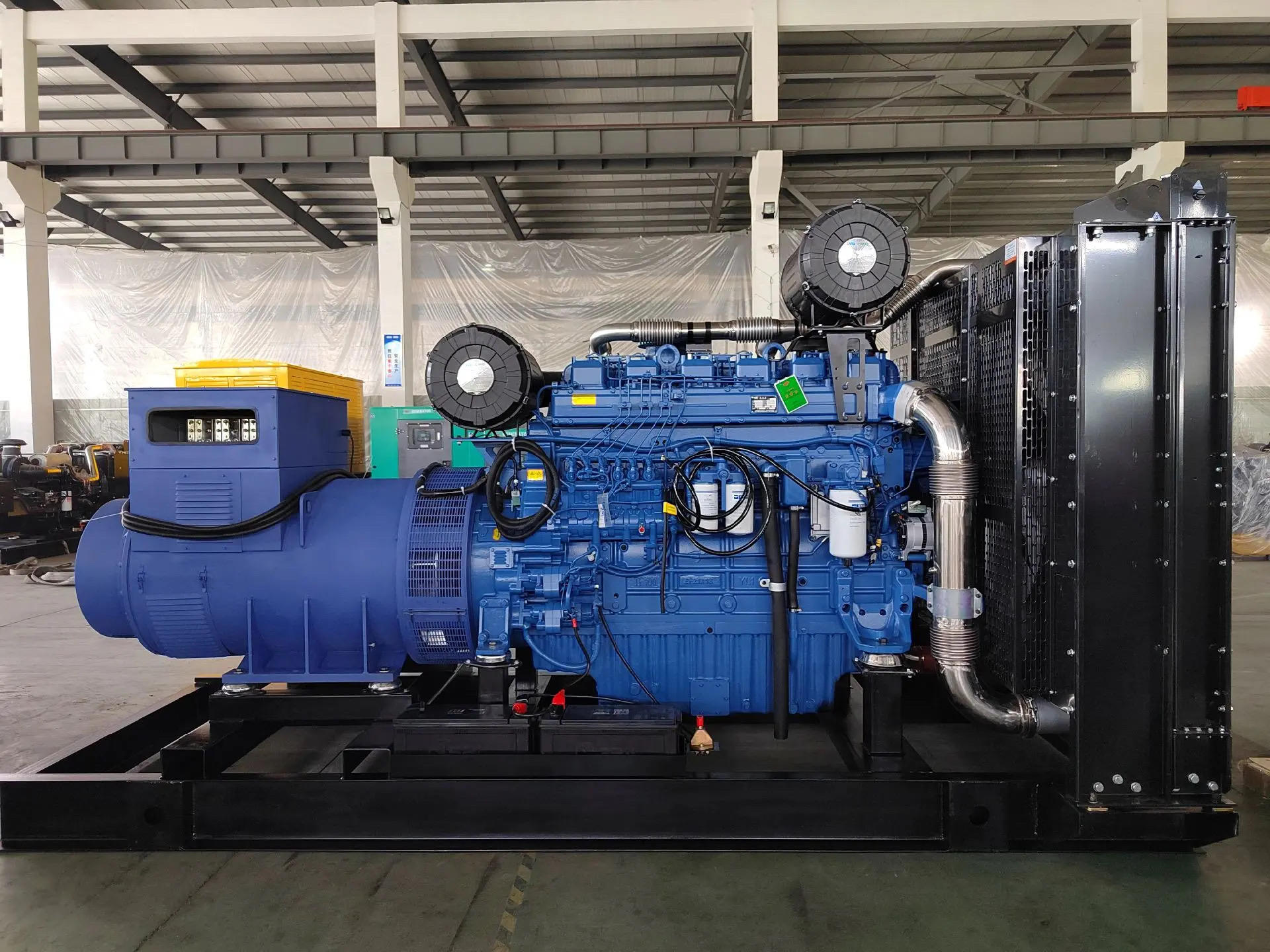
Why is the wet weight a separate figure?
Because diesel weighs about 0.84 kg per litre and a large day tank holds a thousand litres. A 500kVA frame gains close to 850 kg when the tank is full, and that gain decides whether a truck may leave the yard loaded or has to travel with a part tank.
How does the frame change across the power range?
The frame grows in length before it grows in height, because the engine and the alternator sit in line on the skid. A 100kVA set is about 2,300 mm long, a 500kVA set about 4,200 mm, and a 1,000kVA set about 5,500 mm with the radiator at one end. The width stays close to 1,400 mm until the frame passes 500kVA, and the height with a silent canopy reaches 2,100 mm on the largest sets.
The weight grows faster than the length, because the engine block, the alternator and the base frame all thicken together. A 100kVA set is close to 1,600 kg dry, a 500kVA set about 4,800 kg, and a 1,000kVA set about 9,500 kg. Weight per kVA falls as the frame grows, which is why a large set is cheaper per kVA to build and dearer per kg to ship. Tesla Power keeps the four frames on one chart so a buyer can see where the step becomes a second container.
| Frame | Length with canopy | Dry weight | Tank volume |
|---|---|---|---|
| 100kVA | about 2,900 mm | about 1,900 kg | 200 L |
| 200kVA | about 3,400 mm | about 2,900 kg | 400 L |
| 500kVA | about 4,600 mm | about 5,400 kg | 800 L |
| 1,000kVA | about 5,900 mm | about 10,200 kg | 1,500 L |
What does a canopy add to the dimensions?
A canopy adds 300 mm to the length and about 500 mm to the height, and it adds 300 kg to 600 kg to the weight depending on the class. A silent canopy adds more of both, because the acoustic lining and the baffled air path need volume. A super silent set can be 400 mm taller than the open frame it is built on.
The canopy also changes the clearance the site needs, and that is the figure buyers miss. A door that opens 900 mm needs 900 mm beside the set, and a radiator that discharges at the end needs 1,500 mm in front of it. A set installed against a wall with the door on the wall side cannot be serviced, and the fix is a crane rather than a hinge. Tesla Power draws the service clearances beside the envelope on the same sheet.
Does a container set change the figures again?
It does, because the container becomes the envelope and the genset for the container is measured as a box rather than as a frame. A 20ft container set is 6,058 mm long, and the set inside is built to fit with the tank and the spares box, so the figures a site receives describe the container rather than the frame.
How is the shipping envelope measured?
The envelope is measured over the outermost fixed point, which is usually the canopy corner rather than the skid. Packing adds 100 mm on each side for the timber, and the lashing points sit inside that allowance. A set measured at 2,900 mm becomes 3,100 mm packed, and a container booked on the first figure is booked short. Tesla Power measures the packed envelope rather than the drawing for that reason.
A genset in a container is loaded before the doors close, so the height matters as much as the length on a flat rack, because the road escort rule in most countries starts at 4 m overall. A 5,900 mm set on a flat rack sits at about 3,400 mm with the frame, and the same set on a low bed sits lower and costs more. We measure the envelope on the transport it will travel by rather than on the drawing, and the tariff code on the packing list follows the engine tier rather than the frame, as the EU Stage V emission scope sets out for a European entry.
- Length, width and height over the fixed points.
- Packing allowance of 100 mm a side.
- Lashing points and their working load.
Worked example: a 1,000kVA set into a 40ft container
A site asked for a 1,000kVA set in a container and assumed a 40ft box would take it. The frame measured 5,900 mm long and 2,100 mm high with the canopy, and a 40ft container has 12,032 mm of floor and 2,393 mm of door height. The set fitted the floor with room for a 1,500 L tank, and the door height cleared by 293 mm, which is inside the 100 mm packing allowance on each side. At 1,000kVA and 0.8 power factor the set delivers 800kW, and at 0.21 L/kWh it burns 168 L/h, so the tank carries it for 1,500 L ÷ 168 L/h = 8.9 hours between fills.
The weight decided the rest. The set weighed 10,200 kg dry and 11,460 kg with a full tank, and a 40ft container carries about 26,000 kg of payload, so the set travelled with the tank empty and the fuel bought at the destination. The flat rack shipping notes cover the case where the height exceeds the door and the box cannot be used at all.
Which lifting points and centre of gravity matter?
Four lifting points sit at the corners of the base frame, and each is rated for the whole set rather than for a quarter of it. The centre of gravity sits close to the engine end, because the engine is the heavier component, and a crane chart read against the geometric centre will underrate the lift. The figure belongs on the chart beside the weight, and the lifting gear is rated against the ISO 8528-1 set classification that the frame was built to.
A set lifted by the canopy rather than by the base frame deforms the canopy and cracks the seams., which is why the lifting eyes are marked in the drawing and again on the frame. A site that receives a set without the marks should ask for the drawing before the crane arrives, because a lift at the wrong point is the failure that cannot be repaired. Tesla Power paints the four points and stamps the centre on the base frame.
What does the plinth need to carry?
The plinth carries the wet weight plus the dynamic load of the engine, and the second figure is usually twice the first. A 500kVA set at 5,400 kg dry becomes a design load of about 10,800 kg on the concrete, and a site that pours for the dry weight cracks the slab in the first year. The generator room design notes set out the slab, the plinth and the drain as one item.
The plinth also sets the service height, because a set on a 150 mm plinth gives the technician room to reach the drain plug. A set poured flush with the floor cannot be drained without a pump, and the first oil change tells the site that the plinth was too low.
- Wet weight plus twice the dry weight for the slab design.
- Plinth height of at least 150 mm for the drain plug.
- Bunding where the fuel tank sits inside the room.
How do fuel and options change the weight figures?
Fuel and options change the weight more than buyers expect, and each one belongs on the chart as a separate line. A full tank adds 0.84 kg per litre, an ATS adds 150 kg to 400 kg, a trailer adds 700 kg to 1,200 kg, and a bund adds the weight of the steel around the tank. A set specified with all four can weigh a tonne more than the base figure.
The trailer is the option that changes the shipping plan, because a trailer set travels as a vehicle rather than as cargo in some markets. A genset for the trailer follows a different weight rule again, and the trailer mounted generator notes cover the axle load and the brake rule, and both follow from the wet weight rather than from the dry figure. Tesla Power quotes the trailer with the axle load on the offer.
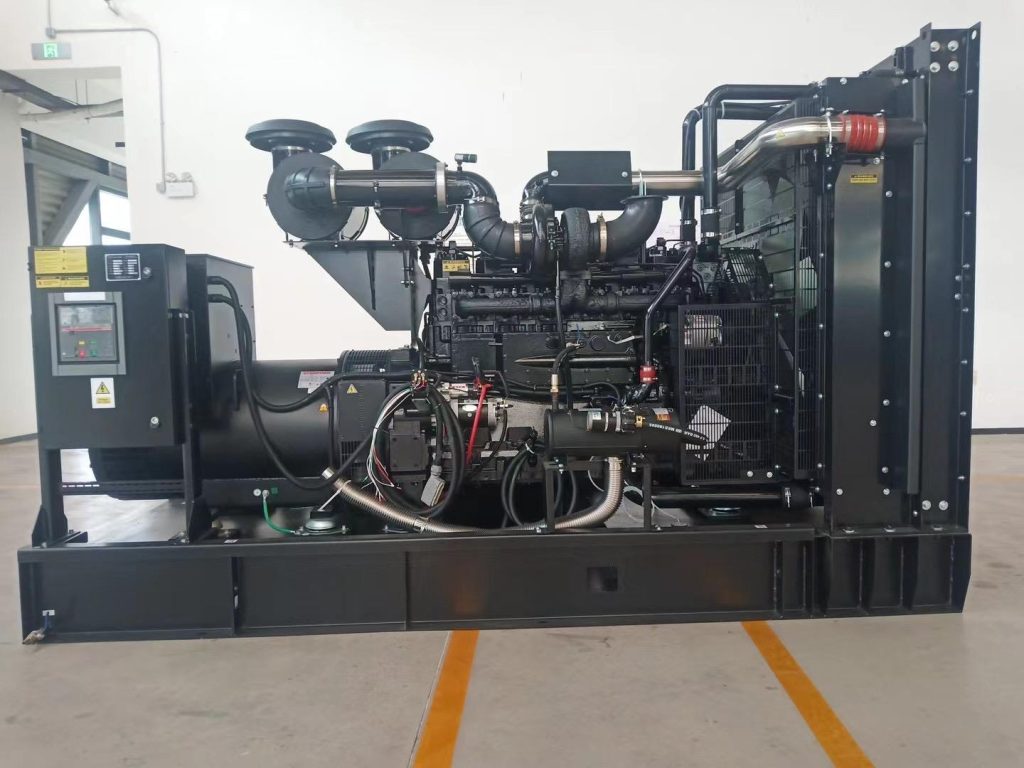
Which documents carry the figures?
Three documents carry the figures a freight forwarder needs, and none of them is the drawing alone. The packing list names the dimensions and the weight, the drawing shows the lifting points and the centre, and the certificate of origin supports the customs entry. A forwarder who receives all three books the container without a site visit, and the marking on each case follows the same list, so IEC enclosure marking practice is worth reading before the labels are printed.
- Packing list with the measured envelope and the wet weight.
- Drawing with the lifting points and the centre of gravity.
- Certificate of origin and the tariff code.
Chinese genset suppliers often send a catalogue figure rather than a measured one, so the engineering notes on export packing set out the three documents as a checklist. The genset documentation for the freight forwarder travels with the case rather than after it, and a forwarder who has it books the box from the packing list alone. Most genset manufacturers will measure a frame on request, and Yangzhou Tesla Power measures before the offer rather than after the order.
Frequently asked questions about a genset dimensions and weight chart
Two figures are quoted, dry and wet, and the difference is the tank volume at 0.84 kg per litre. A freight booking uses the dry weight, and a crane plan uses the wet weight, so a chart with one figure is a chart with a gap.
About 300 mm to the length, 500 mm to the height and 300 kg to 600 kg to the weight. A super silent canopy adds more of all three, because the acoustic lining and the baffled air path need volume rather than a thin wall.
Only in a short-frame build with the radiator over the alternator, because a standard 500kVA frame is 4,200 mm long and the container floor is 5,898 mm. The tank and the spares box usually force a 40ft box on that frame.
Four metres overall is the figure most countries use before an escort is required, and a set on a flat rack reaches it sooner than a set on a low bed. Check the route before the frame is chosen, because a bridge or a tunnel decides the transport as much as the weight does.
Because a crane chart is read against the radius from the hook to the centre rather than to the edge. A set whose centre sits 400 mm towards the engine end needs a longer boom at the same radius, and the lift plan changes with it.
It needs a drain and a bund when the tank sits inside the room, because a leak has to go somewhere other than the floor. A plinth at 150 mm with a drain at the low corner answers both the service and the containment rule.
Measure the frame, add the packing allowance, then book the container against the wet weight and the centre. Send the destination, the route and the canopy class to our export desk and Tesla Power will return the genset dimensions and weight chart for the frame with the lifting points marked. We keep the measured envelope beside the serial number, so a second order ships in the same box.