
Generator power factor is the alternator rating that sets how many real kilowatts a set delivers for every kVA on the nameplate, and buyers should compare it before they request a quotation. A set rated 500kVA at a 0.8 power factor gives 400kW of usable real power, while a set quoted only in kVA hides the real number a site actually draws. Tesla Power's engineering team states the power factor on every export quotation so a buyer can check the kW against the load list and the motor-starting surge. The same 0.8 ratio appears on most industrial alternators because it matches the mixed motor and lighting load a building draws, and a lower figure would shrink the real power a set can carry. Read the alternator data sheet, not just the set rating, because the power factor is where the kVA-to-kW conversion lives. A clean enquiry names the load power factor, the worst-case motor starting, and the voltage the site uses, then asks the supplier for the real kW so the comparison is honest.
- Confirm the alternator power factor on the data sheet, not only the set kVA rating.
- Convert kVA to kW with the stated factor before you compare two offers.
- State the load power factor and the worst motor-starting surge in the enquiry.
- Ask the supplier for the real kW at 0.8, not just the kVA headline.
What does generator power factor mean?
Power factor is the ratio of real power to apparent power, and 0.8 means the alternator delivers 0.8 of a kilowatt of real power for each kVA it carries. The missing part is reactive power, which the load needs to build magnetic fields but does not consume as work. A 500kVA genset at a 0.8 factor therefore delivers 400kW, and the generator manufacturer stamps that pair on the nameplate so the two numbers travel together on every offer.
Most commercial and industrial loads sit near 0.8 because they are a mix of motors, transformers, lighting and small drives. A pure resistive load such as a bank of heaters would pull the factor toward 1.0, while a site heavy with uncorrected motors can fall to 0.7 or lower. The alternator is rated for the 0.8 condition, so a lower load factor does not let the set deliver more kW; it only means more kVA is needed for the same real load.
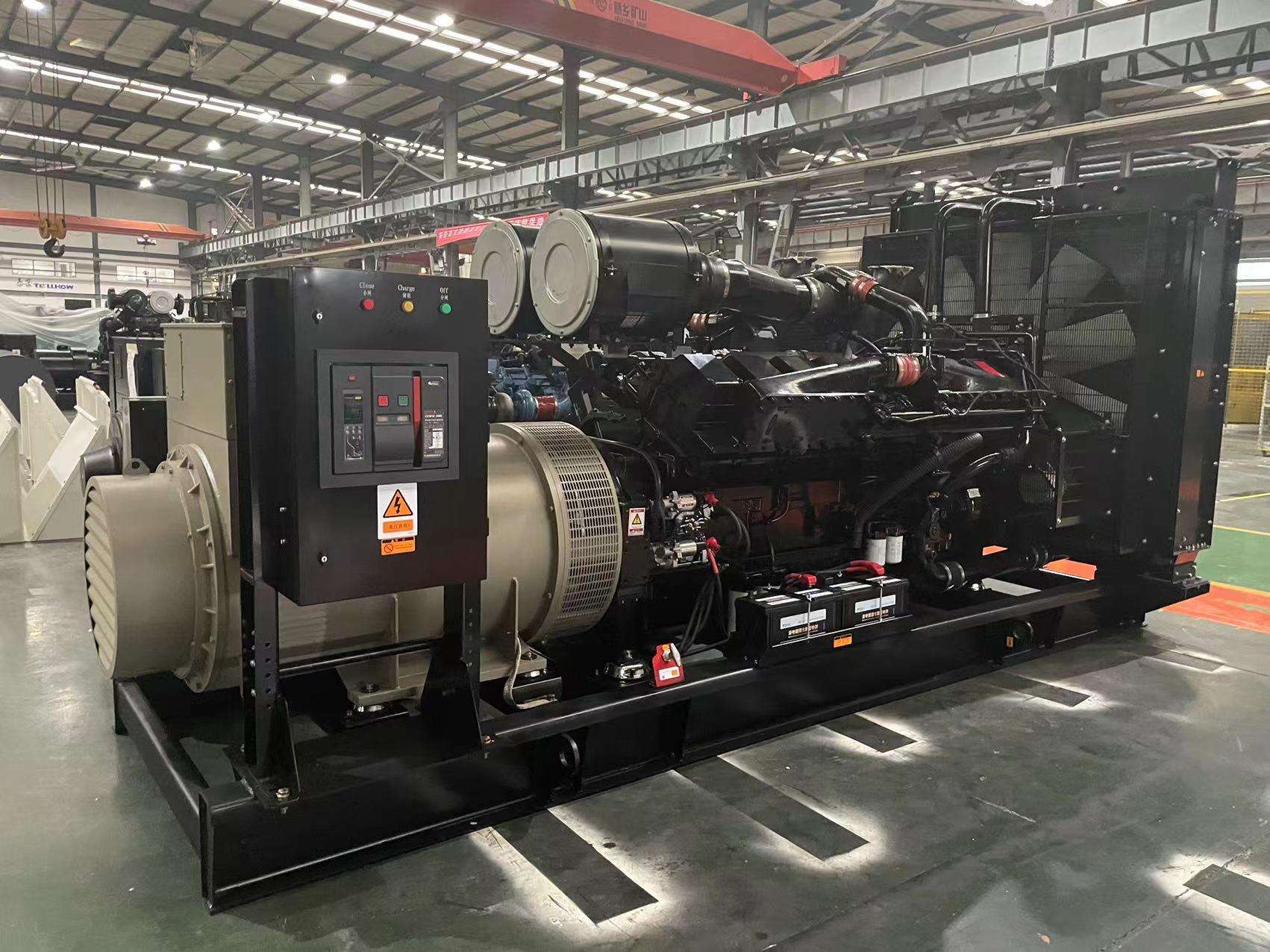
How do you convert kVA to kW at 0.8?
The arithmetic is one multiplication. Take the alternator rating of 500kVA and multiply by the factor of 0.8. The result is 500kVA x 0.8 = 400kW of usable real power, which is the figure a site's distribution board actually sees at full load. A smaller set rated 100kVA at 0.8 gives 100kVA x 0.8 = 80kW, so the same rule scales from a home backup unit up to a 2000kVA industrial set without changing the step.
The table below lists the standard 0.8 pairs a buyer meets on most export offers, from a 100kVA set up to a 1000kVA set.
| Apparent power | Real power at 0.8 pf |
|---|---|
| 100kVA | 80kW |
| 250kVA | 200kW |
| 500kVA | 400kW |
| 1000kVA | 800kW |
The table shows the same set at the 0.8 rating so a buyer can see the real power the nameplate promises. At 500kVA the rated real power is 400kW, which can be the difference between a set that holds the load and one that trips on a hot afternoon. Yangzhou Tesla Power quotes both columns on export offers, because a buyer comparing two sets rated only in kVA cannot see which one keeps more real power after the conversion.
A practical guard is to convert every offer to kW before you compare, then check that figure against the load list with the motor-starting allowance already included. A set that looks cheaper in kVA can be the smaller set in kW, and the buyer only finds out when the breaker trips. The conversion is the first line of any honest comparison, and a diesel generator for export projects should arrive with it pre-computed rather than left for the site engineer to derive.
Why do most alternators use 0.8?
The 0.8 figure is a convention that grew from typical building loads rather than a physical limit of the machine. A modern alternator can be designed for 0.9 or 1.0 if the load demands it, but most commercial sites cluster near 0.8 once motors, lighting and small drives are added together. Standardising on 0.8 lets a China generator supplier quote a set that fits the majority of sites without a custom alternator for every project.
A set designed for a higher power factor is not automatically better; it simply moves the rating point. If the real load sits at 0.8, a 0.9-rated set runs with spare capacity it rarely uses, and the buyer pays for an alternator sized beyond the need. The right question is whether the site load is corrected toward 1.0, not whether the alternator number is high. Tesla Power Equipment sizes the alternator to the load, not to a headline figure, and states the assumed factor on the data sheet so the assumption is visible.
What if the load factor is not 0.8?
When the load power factor falls below 0.8, the set must carry more kVA to deliver the same real kW, and it reaches its apparent-power limit sooner. A site that draws 400kW at 0.8 pf needs a 500kVA set; the same 400kW at a lower factor needs a larger apparent-power rating, so a 500kVA set would be overloaded on kVA even though the real power looks fine. The breaker that trips is the kVA limit, not the engine.
The fix is either a larger alternator or power-factor correction on the load side, usually with capacitors that supply the reactive part locally. A generator for data centres often runs close to the rated factor because the IT load is near unity, while a generator for standby duty feeding motors and compressors can drift lower. Stating the load factor in the enquiry lets the seller pick the alternator rather than guess, and it keeps the real kW from being a surprise at commissioning.
How does 0.8 affect motor starting?
Motor starting is the hard case for any factor discussion because a starting motor draws several times its running current at a low power factor. A 500kVA set at 0.8 pf delivers 400kW, but a direct-on-line motor can pull a starting kVA well above the running figure for a few seconds, dipping the voltage and slowing the alternator. The pf of the running load matters less at that moment than the starting surge the set must absorb.
The standard advice is to size for the running load at the rated factor and then confirm the set holds voltage through the starting transient, using a soft starter or star-delta starter where the motor allows. A set that is tight on kVA at 0.8 has no headroom for the surge, so the same 0.8 figure that looks adequate on paper can fail on the first motor start. The derating note covers how the available kVA already shrinks on a highland site, which makes the starting margin even thinner than the nameplate suggests.
What does the data sheet state?
A complete data sheet lists the rated kVA, the rated pf, the resulting kW, and the voltage and frequency. It also states whether the rating is prime or standby, because the continuous duty class leaves less margin for the reactive part than a few-hours standby class. The buyer should read the kW line, not only the kVA line, because the kW is the real number the distribution board sees.
ISO 8528-1 defines the rating classes and the conditions under which the figures are published, so the data sheet and the standard should agree before an order. the ISO rating class tells the buyer which duty the 0.8 figure belongs to, and a set quoted without that class is a figure without a context. Tesla Power keeps the data sheet and the standard side by side in every export offer, and the 100kVA Weichai export set lists the factor at both prime and standby duty so the buyer can compare without a revised quote.
How do buyers compare kVA-only sets?
Two sets that look identical in kVA can differ in real kW if their power factors differ, so the first step is to convert both to kW at the stated factor and compare those numbers. A 500kVA set at 0.8 and a 550kVA set at a lower factor can deliver the same 400kW, so the larger kVA set is not the larger real set. The comparison only makes sense after the conversion, and a buyer who skips it can pay more for the same real power. Tesla Power publishes the kW next to the kVA on every offer so the two figures travel together.
The second step is to confirm the voltage and frequency match the site, because a 400V 50Hz set and a 480V 60Hz set are not interchangeable even at the same kVA. A Chinese diesel generator manufacturer will state both on the nameplate, and the buyer should check the load list against the delivered voltage before the container ships. The factory overview lists the rating points the team builds to, and ask our sales desk for a kW comparison against a specific load list rather than a kVA headline.
What should an export enquiry state?
A clean enquiry names the load power factor, the voltage and frequency, the worst motor-starting surge, and the duty class the set must meet. Those four inputs let the seller convert kVA to kW correctly and pick an alternator that holds the real load with margin. An enquiry that states only a kVA number forces the seller to assume 0.8, and that assumption suits the factory more than the site. Tesla Power returns a converted kW against the load list on the first reply, so the buyer sees the real number before the quotation is signed.
The buyer should also ask for the conformity file and the data sheet together, because the generator CE marking requirements for the European market expect the rated kW at the declared factor, not a guessed figure. Conformity assessment for the eu market under the Machinery Regulation reads the same data sheet the quotation uses, so the two documents must agree. The engineering help notes list the data sheet fields a buyer should expect, and a missing factor line is a flag to ask the seller rather than a detail to ignore.
Where does ISO 8528-1 fit in?
ISO 8528-1 names the rating class and the conditions under which the kVA and kW figures are published, while the power factor is the link between those two figures on the data sheet. A buyer who reads the standard without the factor sees the class but not the real power; a buyer who reads the factor without the class sees the kW but not the duty it belongs to. The two belong together in the offer envelope. Tesla Power publishes the class and the factor on the same page so the buyer checks the kW against both before the order is placed.
IEC 60034-1 sets the efficiency and temperature rise of the rotating machine itself, which is the other document a buyer should read alongside the rating. IEC 60034-1 and the ISO rating class sit on either side of the alternator nameplate, and the 0.8 figure is the conversion between them. A buyer who checks the kW at 0.8 against the ISO class and the IEC efficiency gets a consistent picture before the order is placed, instead of a kVA headline that hides the real power.
Frequently asked questions about power factor
No. A higher factor simply moves more of the kVA into real kW; it does not change the engine or the fuel the set burns. A 500kVA set at 0.9 delivers 450kW, but that only helps if the real load sits near 0.9. If the load is at 0.8, the extra margin is unused, and the buyer pays for alternator capacity the site does not need. Read the load factor first, then judge the alternator.
Yes. Capacitor banks on the load side supply the reactive part locally, which frees kVA on the alternator and lets the same set carry more real power. Correction is cheaper than replacing the set, and it is the normal fix when a site discovers a low load factor after commissioning. Confirm the correction with the seller so the alternator rating still matches the corrected load.
Because the two numbers are different and both matter. kVA is the total the alternator carries, kW is the real work the load consumes, and the factor is the link between them. A quotation in kVA alone hides the real number, so the nameplate shows both so the buyer can convert and confirm. Read the kW line before you compare two offers, and ask for the data sheet on the first reply.
The set needs more kVA to deliver the same real kW and reaches its apparent-power limit sooner, so size for the running load at the actual factor and add margin for starting. A 400kW load at a lower factor needs a larger apparent-power rating than the 500kVA that covers the 0.8 case, so a 500kVA set would be overloaded even though the real power looks fine. State the load factor in the enquiry so the seller picks the right alternator.
The factor itself does not change, but the spare margin does. A standby set runs a few hours a month and can be rated closer to its limit, while a prime set runs daily and needs a larger thermal margin, so the usable kW at the same 0.8 is effectively tighter. Read the duty class on the data sheet before you compare the kW across two sets.
Request the data sheet. The kVA headline hides the real kW, the voltage, the frequency and the duty class, all of which decide whether the set fits the site. A data sheet with the factor stated lets you convert to kW and check the load list without a follow-up email. Tesla Power sends the data sheet with every export quotation, because the kW at 0.8 is the number that decides whether the set actually fits the site.